finds the numeric solution  of the discrete matrix equation
 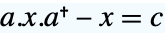 .
.
DiscreteLyapunovSolve[a,b,c]
solves 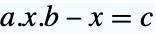 .
.
DiscreteLyapunovSolve[{a,d},c]
solves  .
.
DiscreteLyapunovSolve[{a,d},{b,e},c]
solves  .
.


DiscreteLyapunovSolve
finds the numeric solution  of the discrete matrix equation
 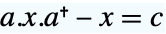 .
.
DiscreteLyapunovSolve[a,b,c]
solves 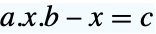 .
.
DiscreteLyapunovSolve[{a,d},c]
solves  .
.
DiscreteLyapunovSolve[{a,d},{b,e},c]
solves  .
.
Details
- DiscreteLyapunovSolve solves the discrete-time Lyapunov and Stein equations.
- DiscreteLyapunovSolve works on both numerical and symbolic matrices.
Examples
open all close allBasic Examples (1)

Scope (7)
Solve a discrete Lyapunov equation:
{a, c} = {(|      |      |
| ---- | ---- |
| -0.5 | 1    |
| -0.1 | -0.4 |), (|   |    |
| - | -- |
| 1 | 0  |
| 1 | -1 |)};DiscreteLyapunovSolve[a, c]a.%.a - % - c//ChopSolve an equation with symbolic matrices:
DiscreteLyapunovSolve[(|       |    |
| ----- | -- |
| 1 / 2 | 1  |
| -1    | -1 |), (|    |    |
| -- | -- |
| c1 | 0  |
| 0  | c2 |)]
Solve  for coefficient matrices having different dimensions:
DiscreteLyapunovSolve[a = (|      |       |      |       |
| ---- | ----- | ---- | ----- |
| 4.05 | 0.831 | 5.71 | 3.44  |
| 0.75 | 3.85  | 1    | 4.42  |
| 3.17 | 1.91  | 5.24 | 4.87  |
| 5.87 | 4.5   | 4    | 2.281 |), b = (|      |      |      |
| ---- | ---- | ---- |
| 3.94 | 3.45 | 2.5  |
| 3.45 | 3.27 | 2.66 |
| 2.98 | 2.9  | 3    |), c = (|       |       |       |
| ----- | ----- | ----- |
| 0.34  | 0.62  | 1.5   |
| 0.94  | 0.91  | 0.19  |
| 0.878 | 0.355 | 1.646 |
| 1.72  | 0.51  | 0.32  |)]//MatrixForm
DiscreteLyapunovSolve[
	{a = (|        |        |        |       |
| ------ | ------ | ------ | ----- |
| 0.048  | -1.22  | -0.75  | 1.961 |
| 1.423  | -0.59  | -1.622 | 0.447 |
| -0.985 | 0.3816 | 1.431  | 1.5   |
| 1.028  | 1.59   | -1.78  | 1.49  |), d = (|      |       |       |      |
| ---- | ----- | ----- | ---- |
| 2.3  | 3.759 | 2.805 | 3.47 |
| 2.62 | 3.26  | 2.3   | 3.17 |
| 3.83 | 3.75  | 3.47  | 2.55 |
| 2.16 | 2.8   | 3.942 | 3.5  |)}, c = (|        |       |        |       |
| ------ | ----- | ------ | ----- |
| 1.0285 | 0.078 | 0.717  | 0.57  |
| 1.252  | 1.389 | 1.0483 | 1.292 |
| 0.298  | 0.18  | 0.485  | 0.996 |
| 0.186  | 0.325 | 1.6628 | 1.304 |)]//MatrixForm
DiscreteLyapunovSolve[
	{a = (|        |         |       |
| ------ | ------- | ----- |
| 0.807  | -1.28   | -1.8  |
| -0.782 | 0.815   | 1.612 |
| -1.35  | -0.9395 | 0.63  |), d = (|       |       |       |
| ----- | ----- | ----- |
| 0.053 | 0.962 | 1.037 |
| 1.85  | 0.41  | 1.466 |
| 1.35  | 0.432 | 1     |)}, {b = (|       |        |        |
| ----- | ------ | ------ |
| 2.541 | 2.944  | 3.6745 |
| 2.689 | 3.9485 | 3.596  |
| 3.464 | 3.957  | 3.15   |), e = (|        |       |       |
| ------ | ----- | ----- |
| -0.868 | 0.387 | 0.001 |
| 0.591  | 0.548 | 0.728 |
| -0.956 | -0.26 | 0.278 |)}, c = (|       |       |      |
| ----- | ----- | ---- |
| 7.25  | 7.915 | 6.47 |
| 5.527 | 5.28  | 5.12 |
| 6.64  | 5     | 5    |)]//MatrixForm
Solve the discrete Lyapunov equation  with symbolic coefficients:
DiscreteLyapunovSolve[{(a), (d)}, (c)]Obtain the symbolic solution of  :
:
DiscreteLyapunovSolve[{(a), (d)}, {(b), (e)}, (c)]Applications (4)
Test the stability of  by checking if the solution of
  is positive definite for a negative definite
  :
:
a = (| | |
| ------ | ------ |
| -3.779 | -3.057 |
| 4.8019 | 3.981 |);DiscreteLyapunovSolve[a, -(| | |
| - | - |
| 1 | 0 |
| 0 | 2 |)]//PositiveDefiniteMatrixQAs expected, the eigenvalues are inside the unit circle:
Eigenvalues[a]a = (| | |
| ------ | ------ |
| -1.676 | -0.168 |
| 0.493 | -0.602 |);DiscreteLyapunovSolve[a, -(| | |
| - | - |
| 1 | 0 |
| 0 | 2 |)]//PositiveDefiniteMatrixQEigenvalues[a]Compute the controllability Gramian of a stable discrete-time system:
{a, b} = {(| | | |
| ------- | ------- | ------- |
| -0.5303 | -0.1961 | -0.0423 |
| 0.1577 | -0.1203 | 0.0643 |
| 0.252 | 0.3137 | -0.3098 |), (| |
| ------- |
| 0.2466 |
| -0.01 |
| -0.0989 |)};DiscreteLyapunovSolve[a, -b.b]ControllabilityGramian[StateSpaceModel[{a, b}, SamplingPeriod -> τ]] == %Compute the observability Gramian of a stable discrete-time system:
{a, c} = {(| | | |
| ------- | ------- | ------ |
| 0.3638 | -0.0334 | -0.188 |
| 0.1655 | 0.7583 | 2.0776 |
| -0.1442 | -0.2858 | -1.023 |), (1.2956 1.3797 1.948)};DiscreteLyapunovSolve[a, -c.c]ObservabilityGramian[StateSpaceModel[{a, {{Subscript[b, 1]}, {Subscript[b, 2]}, {Subscript[b, 3]}}, c}, SamplingPeriod -> τ]] == %Properties & Relations (5)
The equation  , with a negative definite
  , yields a unique positive definite solution if and only if the eigenvalues of
  are within the unit circle:
Subscript[a, stable] = (| | |
| ---- | ----- |
| -0.5 | 0 |
| 0.5 | -0.25 |);DiscreteLyapunovSolve[Subscript[a, stable], c = (| | |
| -- | -- |
| -1 | 0 |
| 0 | -1 |)]//PositiveDefiniteMatrixQEigenvalues[Subscript[a, stable]]Subscript[a, unstable] = (| | |
| --- | ---- |
| 0.5 | 0.1 |
| 0 | -1.5 |);DiscreteLyapunovSolve[Subscript[a, unstale], c = (| | |
| -- | -- |
| -1 | 0 |
| 0 | -1 |)]//PositiveDefiniteMatrixQEigenvalues[Subscript[a, unstable]]The indefinite sum  is the solution to
  if
if  is asymptotically stable:
{a, c} = {(| | |
| ------ | ----- |
| -(1/2) | 0 |
| 0 | (1/2) |), (| | |
| - | - |
| 1 | 0 |
| 0 | 1 |)};-(Underoverscript[∑, n = 0, ∞]MatrixPower[a, n].c.MatrixPower[a, n])DiscreteLyapunovSolve[a, c] == %Compute the infinite-horizon quadratic cost for the asymptotically stable system  :
:
{a, q} = {(| | | | |
| --- | --- | --- | --- |
| 0.5 | 0 | 0 | 0 |
| 0 | 0.4 | 0 | 0 |
| 0 | 0 | 0.3 | 0 |
| 0 | 0 | 0 | 0.1 |), (| | | | |
| --- | --- | - | - |
| 0.5 | 0 | 0 | 0 |
| 0 | 0.8 | 0 | 0 |
| 0 | 0 | 2 | 0 |
| 0 | 0 | 0 | 4 |)};s = DiscreteLyapunovSolve[a, -q];Subscript[x, 0] = (| |
| -- |
| 1 |
| 0 |
| -1 |
| 0 |);((1/2) Subscript[x, 0].s.Subscript[x, 0])[[1, 1]]Compute the same using direct summation:
With[{v = MatrixPower[a, n].Subscript[x, 0]}, Limit[(1/2)Underoverscript[∑, n = 0, N]v.q.v, N -> ∞]][[1, 1]]
{a, b, c, d, e} = {(| | |
| -- | - |
| -1 | 2 |
| 1 | 1 |), (| | |
| - | - |
| 1 | 0 |
| 0 | 1 |), (| | |
| -- | - |
| 1 | 3 |
| -2 | 1 |), (| | |
| - | - |
| 0 | 0 |
| 0 | 0 |), (| | |
| - | - |
| 0 | 0 |
| 0 | 0 |)};DiscreteLyapunovSolve[{a, d}, {b, e}, c]LinearSolve gives the same solution:
LinearSolve[a, c]Solve the equation  using LinearSolve:
{a, b, c, d, e} = {(| | |
| ------ | ------ |
| 1.6015 | 3.2231 |
| 1.1416 | 2.655 |), (| | |
| ------ | ------ |
| 2.0354 | 2.4405 |
| 1.4194 | 3.5231 |), (| | |
| ------ | ------ |
| 1.7552 | 1.3824 |
| 1.1756 | 3.994 |), (| | |
| ------ | ------ |
| 2.2495 | 2.8306 |
| 1.6824 | 1.3905 |), (| | |
| ------ | ------ |
| 2.0441 | 2.3971 |
| 2.465 | 2.0718 |)};Partition[LinearSolve[KroneckerProduct[a, b] + KroneckerProduct[-d, e], Flatten[c]], 2]DiscreteLyapunovSolve gives the same solution:
DiscreteLyapunovSolve[{a, d}, {b, e}, c]Text
Wolfram Research (2010), DiscreteLyapunovSolve, Wolfram Language function, https://reference.wolfram.com/language/ref/DiscreteLyapunovSolve.html.
CMS
Wolfram Language. 2010. "DiscreteLyapunovSolve." Wolfram Language & System Documentation Center. Wolfram Research. https://reference.wolfram.com/language/ref/DiscreteLyapunovSolve.html.
APA
Wolfram Language. (2010). DiscreteLyapunovSolve. Wolfram Language & System Documentation Center. Retrieved from https://reference.wolfram.com/language/ref/DiscreteLyapunovSolve.html