GeneralizedPolyLog[{a1,a2,…,ak},x]
gives the Goncharov polylogarithm defined as the iterated integral  .
.


GeneralizedPolyLog
GeneralizedPolyLog[{a1,a2,…,ak},x]
gives the Goncharov polylogarithm defined as the iterated integral  .
.
GeneralizedPolyLog[{a1,a2,…,ak},x,p]
gives the Goncharov polylogarithm with base point p.
GeneralizedPolyLog[{a1,a2,…,ak},x,{p1,p2,…,pk}]
gives the Goncharov polylogarithm with a sequence of base points (p1, p2, …).
Details
- GeneralizedPolyLog gives Chen iterated integrals from the form
 , unifying logs, classical polylogs and harmonic polylogs.
 - GeneralizedPolyLog is defined as an iterated integral (when it converges) as follows:
-
![TemplateBox[{TemplateBox[{{{a, _, {(, 1, )}}, ,, {a, _, {(, 2, )}}, ,, ..., ,, {a, _, {(, k, )}}}}, ImplicitList], x}, GeneralizedPolyLog]](Files/GeneralizedPolyLog.en/1.png "TemplateBox[{TemplateBox[{{{a, _, {(, 1, )}}, ,, {a, _, {(, 2, )}}, ,, ..., ,, {a, _, {(, k, )}}}}, ImplicitList], x}, GeneralizedPolyLog]")

![TemplateBox[{TemplateBox[{{{a, _, {(, 1, )}}, ,, {a, _, {(, 2, )}}, ,, ..., ,, {a, _, {(, k, )}}}}, ImplicitList], {x, ;, , p}}, GeneralizedPolyLog]](Files/GeneralizedPolyLog.en/3.png "TemplateBox[{TemplateBox[{{{a, _, {(, 1, )}}, ,, {a, _, {(, 2, )}}, ,, ..., ,, {a, _, {(, k, )}}}}, ImplicitList], {x, ;, , p}}, GeneralizedPolyLog]")

![TemplateBox[{TemplateBox[{{{a, _, {(, 1, )}}, ,, {a, _, {(, 2, )}}, ,, ..., ,, {a, _, {(, k, )}}}}, ImplicitList], {x, ;, , {{, {{p, _, 1}, ,, , {p, _, 2}, ,, , ..., ,, , {p, _, k}}, }}}}, GeneralizedPolyLog]](Files/GeneralizedPolyLog.en/4.png "TemplateBox[{TemplateBox[{{{a, _, {(, 1, )}}, ,, {a, _, {(, 2, )}}, ,, ..., ,, {a, _, {(, k, )}}}}, ImplicitList], {x, ;, , {{, {{p, _, 1}, ,, , {p, _, 2}, ,, , ..., ,, , {p, _, k}}, }}}}, GeneralizedPolyLog]")

- The first argument of GeneralizedPolyLog[{a1,a2,…,ak},x] is the word, and
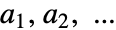 are the letters (or weights). x is the endpoint.
 - The defining iterated integral of
![TemplateBox[{TemplateBox[{{{a, _, 1}, ,, {a, _, 2}, ,, ..., ,, {a, _, k}}}, ImplicitList], x}, GeneralizedPolyLog]](Files/GeneralizedPolyLog.en/5.png "TemplateBox[{TemplateBox[{{{a, _, 1}, ,, {a, _, 2}, ,, ..., ,, {a, _, k}}}, ImplicitList], x}, GeneralizedPolyLog]") diverges in the following three conditions:
diverges in the following three conditions: -
Lower-endpoint collision 
Upper-endpoint collision 
Letter crossing (pole on the path) at least one of 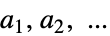 lies on the open segment
- The following measures are taken in the divergent cases:
-
Lower-endpoint collision returns a regularized value using shuffle relations Upper-endpoint collision returns ComplexInfinity Letter crossing (pole on the path) returns values obtained by analytic continuation, using infinitesimal circular detours around the poles - GeneralizedPolyLog is a mathematical function, suitable for both symbolic and numerical manipulation.
- The function supports numerical evaluation of the following types:
-
machine precision N Yes arbitrary precision N Yes worst-case intervals CenteredInterval No average-case intervals Around No ![TemplateBox[{TemplateBox[{}, ImplicitList], x}, GeneralizedPolyLog]=1](Files/GeneralizedPolyLog.en/6.png "TemplateBox[{TemplateBox[{}, ImplicitList], x}, GeneralizedPolyLog]=1") . On principal branches,
. On principal branches, ![TemplateBox[{TemplateBox[{0}, ImplicitList], x}, GeneralizedPolyLog]=log(x)](Files/GeneralizedPolyLog.en/7.png "TemplateBox[{TemplateBox[{0}, ImplicitList], x}, GeneralizedPolyLog]=log(x)") and
and ![TemplateBox[{TemplateBox[{a}, ImplicitList], x}, GeneralizedPolyLog]=log(1-x/a)](Files/GeneralizedPolyLog.en/8.png "TemplateBox[{TemplateBox[{a}, ImplicitList], x}, GeneralizedPolyLog]=log(1-x/a)") .
.- Products at the same endpoint satisfy the shuffle algebra:
![TemplateBox[{TemplateBox[{u}, ImplicitList], x}, GeneralizedPolyLog]*TemplateBox[{TemplateBox[{v}, ImplicitList], x}, GeneralizedPolyLog]= sum_(w in u ⧢ v)TemplateBox[{TemplateBox[{w}, ImplicitList], x}, GeneralizedPolyLog]](Files/GeneralizedPolyLog.en/9.png "TemplateBox[{TemplateBox[{u}, ImplicitList], x}, GeneralizedPolyLog]*TemplateBox[{TemplateBox[{v}, ImplicitList], x}, GeneralizedPolyLog]= sum_(w in u ⧢ v)TemplateBox[{TemplateBox[{w}, ImplicitList], x}, GeneralizedPolyLog]") , where
, where  denotes all interleavings preserving the internal orders of
  and
and  .
. - While MultiplePolyLog is the generalization of the series definition of PolyLog, GeneralizedPolyLog represents a generalization of the integral definition of PolyLog.
- Sum, GeneratingFunction, ExponentialGeneratingFunction, ZTransform, DirichletTransform, Integrate, DSolve and AsymptoticDSolveValue may return results in terms of GeneralizedPolyLog.
Examples
open all close allBasic Examples (6)
Evaluate a GeneralizedPolyLog numerically:
GeneralizedPolyLog[{2, 3}, 1]The defining integral of a GeneralizedPolyLog:
Integrate[(1/(x1 - 1)(x2 - 2)(x3 - 3)(x4 - 4)), {x1, 0, I}, {x2, 0, x1}, {x3, 0, x2}, {x4, 0, x3}]Plot a GeneralizedPolyLog over a subset of the reals:
Plot[GeneralizedPolyLog[{4, 10}, x], {x, -2, 2}]Plot over a subset of complexes:
ComplexPlot3D[GeneralizedPolyLog[{4, 10}, x], {x, -1 - I, 1 + I}]Plot the real and imaginary parts of a family of GeneralizedPolyLog function:
GraphicsRow[{Plot[Evaluate@Table[Re@GeneralizedPolyLog[{c * I, -c * I}, x], {c, 6}], {x, -2, 2}, PlotStyle -> Automatic], Plot[Evaluate@Table[Im@GeneralizedPolyLog[{c * I, -c * I}, x], {c, 6}], {x, -2, 2}, PlotStyle -> Automatic]}]Series expansion at the origin:
Series[GeneralizedPolyLog[{I, 3}, x], {x, 0, 10}]Scope (31)
Numerical Evaluation (2)
Specific Values (8)
A single zero letter reproduces the principal logarithm:
GeneralizedPolyLog[{0}, 10]GeneralizedPolyLog[{2, 7}, 1]Compute over rational letters:
GeneralizedPolyLog[{-2 / 3, 10 / 7}, 1]Compute over algebraic letters:
GeneralizedPolyLog[{Sqrt[2], Sqrt[3]}, 1]GeneralizedPolyLog[{-I, I}, 1]Word composed of three letters:
GeneralizedPolyLog[{2, 10, 20}, 1]Word composed of five letters:
GeneralizedPolyLog[{0, 2, 2, 2, 2}, 1]Evaluate at a complex endpoint:
GeneralizedPolyLog[{-2, 0, 2}, 2 - 4I]Visualization (7)
Plot the real and imaginary parts of a depth-2 GeneralizedPolyLog along the real axis:
ReImPlot[GeneralizedPolyLog[{-I, I}, x], {x, -2, 2}]Evaluate the same GeneralizedPolyLog along the slanted segment 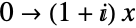 :
:
pathPlot = Graphics[{Thick, Arrowheads[.15], Arrow[{{0, 0}, {1, 1}}]}, ...];
ReImPlot[GeneralizedPolyLog[{-I, I}, (1 + I) x], {x, 0, 1}, ...]
Trace the GeneralizedPolyLog along the circle ![TemplateBox[{z}, Abs]=1/2](Files/GeneralizedPolyLog.en/10.png "TemplateBox[{z}, Abs]=1/2") :
:
pathCirclePlot = Graphics[{Circle[{0, 0}, 1 / 2, {-Pi / 2, 3 Pi / 2}] }, ...];
ParametricPlot[ReIm@GeneralizedPolyLog[{-I, I}, (1 / 2) Exp[I t]], {t, 0, 2 Pi}, ...]
See the evolution with four different radii:
With[{rs = {.3, .45, .6, .75}}, ParametricPlot[Evaluate@Table[ReIm@GeneralizedPolyLog[{-I, I}, r Exp[I t]], {r, rs}], {t, 0, 2 Pi}, ...]]Check the effect of incrementally adding new symmetric letters:
GraphicsRow[{ParametricPlot[ReIm[GeneralizedPolyLog[{1}, (1 / 2)Exp[I t]]], {t, 0, 2Pi}, Rule[...]], ParametricPlot[ReIm[GeneralizedPolyLog[{-1, 1}, (1 / 2)Exp[I t]]], {t, 0, 2Pi}, Rule[...]], ParametricPlot[ReIm[GeneralizedPolyLog[{-1, -1, 1, 1}, (1 / 2)Exp[I t]]], {t, 0, 2Pi}, Rule[...]],
	ParametricPlot[ReIm[GeneralizedPolyLog[{-1, -1, -1, 1, 1, 1}, (1 / 2)Exp[I t]]], {t, 0, 2Pi}, Rule[...]]}
	]
Vary the second letter  while keeping the argument fixed at
  :
:
ReImPlot[GeneralizedPolyLog[{-I, k I}, 1], {k, 1, 10}]Zero contours of real and imaginary parts of GeneralizedPolyLog[{I,-I},z]:
Clear[g];g[z_] := GeneralizedPolyLog[{I, -I}, z];
ContourPlot[{Re[g[x + I y]] == 0, Im[g[x + I y]] == 0}, {x, -1 / 2, 1 / 2}, {y, -1 / 2, 1 / 2}, ...]
Differentiation (6)
Take derivative w.r.t. the endpoint:
D[GeneralizedPolyLog[{2, 3, 4}, x], x]D[GeneralizedPolyLog[{1, 2, 3, 4, 5, 6}, x], {x, 3}]
D[GeneralizedPolyLog[{-6, 8, 10}, x ^ 2], x]Take derivative w.r.t. a letter:
D[GeneralizedPolyLog[{a, 3, 4}, x], a]Take the derivative of a GeneralizedPolyLog having a nonzero basepoint w.r.t. the endpoint:
D[GeneralizedPolyLog[{2, 3, 4}, x, I], x]Take the derivative of a GeneralizedPolyLog having a sequence of basepoints w.r.t. the endpoint:
D[GeneralizedPolyLog[{2, 3, 4}, x, {I, 2I, 3I}], x]Integration (1)
Indefinite integration involving GeneralizedPolyLog:
Integrate[GeneralizedPolyLog[{2, 3}, x], x]Definite integration involving GeneralizedPolyLog:
Integrate[GeneralizedPolyLog[{2, 3}, x], {x, 0, 1}]Algebraic Relations (7)
![TemplateBox[{TemplateBox[{{{c, -, {z, _, 1}}, ,, {c, -, {z, _, 2}}, ,, ..., ,, {c, -, {z, _, n}}}}, ImplicitList], c}, GeneralizedPolyLog]=(-1)^nTemplateBox[{TemplateBox[{{{z, _, n}, ,, {z, _, {(, {n, -, 1}, )}}, ,, ..., ,, {z, _, 1}}}, ImplicitList], c}, GeneralizedPolyLog]](Files/GeneralizedPolyLog.en/11.png "TemplateBox[{TemplateBox[{{{c, -, {z, _, 1}}, ,, {c, -, {z, _, 2}}, ,, ..., ,, {c, -, {z, _, n}}}}, ImplicitList], c}, GeneralizedPolyLog]=(-1)^nTemplateBox[{TemplateBox[{{{z, _, n}, ,, {z, _, {(, {n, -, 1}, )}}, ,, ..., ,, {z, _, 1}}}, ImplicitList], c}, GeneralizedPolyLog]")
PossibleZeroQ@Chop@N[GeneralizedPolyLog[{4, 6, 8, 10}, 2] - GeneralizedPolyLog[{-8, -6, -4, -2}, 2]]Scaling relationship: for nonzero  ,
, ![TemplateBox[{TemplateBox[{{{c, , {z, _, 1}}, ,, {c, , {z, _, 2}}, ,, ..., ,, {c, , {z, _, n}}}}, ImplicitList], c}, GeneralizedPolyLog]=TemplateBox[{TemplateBox[{{{z, _, 1}, ,, {z, _, 2}, ,, ..., ,, {z, _, n}}}, ImplicitList], 1}, GeneralizedPolyLog]](Files/GeneralizedPolyLog.en/12.png "TemplateBox[{TemplateBox[{{{c, , {z, _, 1}}, ,, {c, , {z, _, 2}}, ,, ..., ,, {c, , {z, _, n}}}}, ImplicitList], c}, GeneralizedPolyLog]=TemplateBox[{TemplateBox[{{{z, _, 1}, ,, {z, _, 2}, ,, ..., ,, {z, _, n}}}, ImplicitList], 1}, GeneralizedPolyLog]") :
:
PossibleZeroQ@Chop@N[GeneralizedPolyLog[{2I, -2I, 2I, -2I}, 2] - GeneralizedPolyLog[{I, -I, I, -I}, 1]]Shuffle product identity: for words  and
and  with common endpoint
  ,
, ![TemplateBox[{TemplateBox[{u}, ImplicitList], x}, GeneralizedPolyLog]*TemplateBox[{TemplateBox[{v}, ImplicitList], x}, GeneralizedPolyLog]= sum_(w in u ⧢ v)TemplateBox[{TemplateBox[{w}, ImplicitList], x}, GeneralizedPolyLog]](Files/GeneralizedPolyLog.en/13.png "TemplateBox[{TemplateBox[{u}, ImplicitList], x}, GeneralizedPolyLog]*TemplateBox[{TemplateBox[{v}, ImplicitList], x}, GeneralizedPolyLog]= sum_(w in u ⧢ v)TemplateBox[{TemplateBox[{w}, ImplicitList], x}, GeneralizedPolyLog]") :
:
product = Inactive[GeneralizedPolyLog][{1, 2}, 1 / 2] * Inactive[GeneralizedPolyLog][{3, 4}, 1 / 2];expanded = ResourceFunction["ShuffleProductExpand"][product]PossibleZeroQ@Chop@N@Activate[product - expanded]GeneralizedPolyLog satisfies the stuffle product identity via the standard map to MultiplePolyLog:
product = Inactive[GeneralizedPolyLog][{2}, 1] * Inactive[GeneralizedPolyLog][{6}, 1];expanded = ResourceFunction["StuffleProductExpand"][product]PossibleZeroQ@Chop@N@Activate[product - expanded]Hölder convolution: for letters  and split point
  ,
, ![TemplateBox[{TemplateBox[{{{a, _, 1}, ,, {a, _, 2}, ,, ..., ,, {a, _, n}}}, ImplicitList], 1}, GeneralizedPolyLog]=sum_(j=0)^n(-1)^jTemplateBox[{TemplateBox[{{{1, -, {a, _, j}}, ,, {1, -, {a, _, {(, {j, -, 1}, )}}}, ,, ..., ,, {1, -, {a, _, 1}}}}, ImplicitList], {1, -, q}}, GeneralizedPolyLog]TemplateBox[{TemplateBox[{{{a, _, {(, {j, +, 1}, )}}, ,, ..., ,, {a, _, n}}}, ImplicitList], q}, GeneralizedPolyLog]](Files/GeneralizedPolyLog.en/14.png "TemplateBox[{TemplateBox[{{{a, _, 1}, ,, {a, _, 2}, ,, ..., ,, {a, _, n}}}, ImplicitList], 1}, GeneralizedPolyLog]=sum_(j=0)^n(-1)^jTemplateBox[{TemplateBox[{{{1, -, {a, _, j}}, ,, {1, -, {a, _, {(, {j, -, 1}, )}}}, ,, ..., ,, {1, -, {a, _, 1}}}}, ImplicitList], {1, -, q}}, GeneralizedPolyLog]TemplateBox[{TemplateBox[{{{a, _, {(, {j, +, 1}, )}}, ,, ..., ,, {a, _, n}}}, ImplicitList], q}, GeneralizedPolyLog]") :
:
HolderRHS[a_List, q_ ? NumericQ] := Module[{n = Length[a]}, Sum[(-1) ^ j * GeneralizedPolyLog[Reverse[1 - Take[a, j]], 1 - q] * GeneralizedPolyLog[Drop[a, j], q], {j, 0, n}]];PossibleZeroQ@Chop@N[GeneralizedPolyLog[{2, 3, 4}, 1] - HolderRHS[{2, 3, 4}, 1]]GeneralizedPolyLog is covariant under complex conjugation:

PossibleZeroQ@Chop@N[Conjugate[GeneralizedPolyLog[{I, 2 + I}, 1 - I]] - GeneralizedPolyLog[Conjugate /@ {I, 2 + I}, Conjugate[1 - I]]]Antipode identity: ![sum_(k=0)^n(-1)^kTemplateBox[{TemplateBox[{{{a, _, k}, ,, ..., ,, {a, _, 1}}}, ImplicitList], x}, GeneralizedPolyLog]TemplateBox[{TemplateBox[{{{a, _, {(, {k, +, 1}, )}}, ,, ..., ,, {a, _, n}}}, ImplicitList], x}, GeneralizedPolyLog]=0](Files/GeneralizedPolyLog.en/17.png "sum_(k=0)^n(-1)^kTemplateBox[{TemplateBox[{{{a, _, k}, ,, ..., ,, {a, _, 1}}}, ImplicitList], x}, GeneralizedPolyLog]TemplateBox[{TemplateBox[{{{a, _, {(, {k, +, 1}, )}}, ,, ..., ,, {a, _, n}}}, ImplicitList], x}, GeneralizedPolyLog]=0") with the convention
with the convention ![TemplateBox[{TemplateBox[{{{a, _, 0}, ,, ..., ,, {a, _, 1}}}, ImplicitList], x}, GeneralizedPolyLog]=1](Files/GeneralizedPolyLog.en/18.png "TemplateBox[{TemplateBox[{{{a, _, 0}, ,, ..., ,, {a, _, 1}}}, ImplicitList], x}, GeneralizedPolyLog]=1") :
:
x = 1;w = {2, 5, 7};sum = Sum[(-1) ^ k * GeneralizedPolyLog[Reverse@Take[w, k], x] * GeneralizedPolyLog[Drop[w, k], x], {k, 0, Length[w]}];PossibleZeroQ@Chop@N[sum]Generalizations & Extensions (7)
Regularization (3)
Upper-endpoint collision—GeneralizedPolyLog diverges when the endpoint coincides with the first letter:
GeneralizedPolyLog[{1, 2}, 1]Lower-endpoint collision—trailing zeros in the word cause divergence but can be regularized:
GeneralizedPolyLog[{1, 2, 0, 0}, 1 / 2]N[%]With regularization, one can continue to use the iterated integral definition with Log[x]. A regularized GeneralizedPolyLog:
GeneralizedPolyLog[{1 + I, 0, 0}, x]
% /. x -> 2.NIntegrate[(1 / (x - (1 + I)))Log[x] ^ 2 / Factorial[2], {x, 0, 2}]Analytic Continuation (2)
The defining integral for GeneralizedPolyLog[{2, I}, 3] diverges, since the pole at  lies on the open segment
  :
:
Integrate[(1/(x1 - 2)(x2 - I)), {x1, 0, 3}, {x2, 0, x1}]
A finite value is obtained by integrating along an infinitesimal circular detour around the pole:
GeneralizedPolyLog[{2, I}, 3]//NVisualize the branch-cut discontinuity of GeneralizedPolyLog[{2, I},x]:
ReImPlot[GeneralizedPolyLog[{2, I}, x], {x, 0, 3}]Nonzero Base Point (2)
A GeneralizedPolyLog with base point I:
GeneralizedPolyLog[{2, 3}, 1, I]Obtain the same from its integral representation:
% == Integrate[(1/(x1 - 2)(x2 - 3)), {x1, I, 1}, {x2, I, x1}]A GeneralizedPolyLog with a sequence of base points {I, 2 I}:
GeneralizedPolyLog[{2, 3}, 1, {I, 2I}]Obtain the same from its integral representation:
% == Integrate[(1/(x1 - 2)(x2 - 3)), {x1, I, 1}, {x2, 2I, x1}]Applications (12)
Euler Sum (2)
An Euler sum involving a three-argument HarmonicNumber is expressed in terms of GeneralizedPolyLog and MultiplePolyLog:
Underoverscript[∑, n = 1, ∞](((1/4))^n HarmonicNumber[n, 1, (1/2)]^3/n)An Euler sum involving a MultipleHarmonicNumber:
Underoverscript[∑, n = 1, ∞](MultipleHarmonicNumber[n, {1, 1, 1}, {(1/4), (1/5), -(1/6)}]/n^2)Iterated Integrals (4)
Evaluate an iterated integral in terms of GeneralizedPolyLog:
Integrate[(1/(x1 - 1) (x2 - 4I)(x2 - 6I)(x2 - 8I)(x3 - 11I)), {x1, 0, (1/2)}, {x2, 0, x1}, {x3, 0, x2}]A rational iterated integral with a polynomial part evaluates in terms of GeneralizedPolyLog, PolyLog and Log:
Integrate[(x1^3/x1^2 - 1)(1/1 + x2)(1/2x3 - 6), {x1, 0, I}, {x2, 0, x1}, {x3, 0, x2}]A rational iterated integral with nonzero lower limits evaluates in terms of GeneralizedPolyLog:
Integrate[(1/(x1 - 1) (x2 - 4I)(x2 - 8I)(x3 - 11I)), {x1, I, 1 / 2}, {x2, 2I, x1}, {x3, 3I, x2}]//ShortAn iterated integral that evaluates in terms of a three-argument GeneralizedPolyLog:
Integrate[(x1/(-(5/2) + x1) x2 (-(11/4) + x3)), {x1, 0, (1/2)}, {x2, 1, x1}, {x3, (4/3), x2}]Rational ODE System (2)
Solve a linear homogeneous system of ordinary differential equations in terms of GeneralizedPolyLog:
DSolveValue[{Derivative[1][y1][x] == ((2 - 30 I) + (50 - 3 I) x + 7 x^2/(-I + x) (I + x) (10 + x)) y2[x] + ((3 - 30 I) + (70 - 3 I) x + 10 x^2/(-I + x) (I + x) (10 + x))y3[x], Derivative[1][y2][x] == (2 ((1 + 10 I) + (20 + I) x + 3 x^2)/(-I + x) (I + x) (10 + x)) y3[x], Derivative[1][y3][x] == 0, y1[0] == 1, y2[0] == 2, y3[0] == 3}, {y1[x], y2[x], y3[x]}, x]A Fuchsian system with two real and two complex poles:
DSolveValue[{Derivative[1][y1][x] == ((2/-2 + x) + (1/-I + x) + (2/I + x) + (1/2 + x)) y2[x] + ((3/-2 + x) + (3/-I + x) + (4/I + x) + (2/2 + x)) y3[x] + ((4/-2 + x) + (5/-I + x) + (6/I + x) + (3/2 + x)) y4[x], Derivative[1][y2][x] == ((3/-2 + x) + (5/-I + x) + (1/I + x) + (1/2 + x)) y3[x] + ((4/-2 + x) + (6/-I + x) + (2/I + x) + (2/2 + x)) y4[x], Derivative[1][y3][x] == ((2/-2 + x) + (1/-I + x) + (3/I + x) + (1/2 + x)) y4[x], Derivative[1][y4][x] == 0, y1[0] == 1, y2[0] == 1, y3[0] == 1, y4[0] == 1}, {y1[x], y2[x], y3[x], y4[x]}, x]//ShortRational Perturbative ODE System (2)
Solution of a perturbative Fuchsian ODE system in epsilon form is expressed using GeneralizedPolyLog:
AsymptoticDSolveValue[{Derivative[1][y1][x] == ϵ ((3 y1[x]/-6 + x) + ((1/-8 + x) + (2/-6 + x)) y2[x] + ((2/-8 + x) + (3/-6 + x)) y3[x]), Derivative[1][y2][x] == ϵ (-(4 y1[x]/-8 + x) + ((3/-8 + x) + (2/-6 + x)) y3[x]), Derivative[1][y3][x] == 0, y1[0] == 1, y2[0] == 2, y3[0] == 3}, {y1[x], y2[x], y3[x]}, x, {ϵ, 0, 3}]A rational perturbative ODE system:
AsymptoticDSolveValue[{Derivative[1][y1][x] == (ϵ y1[x]/(-2 + x) ^ 2) - (2 ϵ y2[x]/1 + x), Derivative[1][y2][x] == (ϵ y1[x]/2 + x) + (3 ϵ y2[x]/(I + x) ^ 3), y1[0] == 1, y2[0] == 1}, {y1[x], y2[x]}, x, {ϵ, 0, 3}]//Short[#, 8]&Rational Perturbative PDE System (2)
Solve a rational perturbative PDE system in  -form in terms of GeneralizedPolyLog:
{aXeps, aYeps} = {{{(ϵ/1 - x), (ϵ/x), 0}, {0, (ϵ/-1 + x), 0}, {0, 0, 0}}, {{0, 0, 0}, {0, 0, 0}, {0, 0, -(2 ϵ/-1 + y)}}};
eqns = Join[Thread[D[{f1[x, y], f2[x, y], f3[x, y]}, x] == aXeps.{f1[x, y], f2[x, y], f3[x, y]}], Thread[D[{f1[x, y], f2[x, y], f3[x, y]}, y] == aYeps.{f1[x, y], f2[x, y], f3[x, y]}]];
AsymptoticDSolveValue[eqns, {f1[x, y], f2[x, y], f3[x, y]}, {x, y}, {ϵ, 0, 2}]
Solve a rational perturbative PDE system that is not in  -form in terms of GeneralizedPolyLog:
{aXeps, aYeps} = {{{1 / x + ϵ / (1 - x), ϵ / x, 0}, {0, 1 / x - ϵ / (1 - x), 0}, {0, 0, 0}}, {{0, 0, 0}, {0, 0, 0}, {0, 0, 1 / y + 2 ϵ / (1 - y)}}};
eqns = Join[Thread[D[{f1[x, y], f2[x, y], f3[x, y]}, x] == aXeps.{f1[x, y], f2[x, y], f3[x, y]}], Thread[D[{f1[x, y], f2[x, y], f3[x, y]}, y] == aYeps.{f1[x, y], f2[x, y], f3[x, y]}]];
AsymptoticDSolveValue[eqns, {f1[x, y], f2[x, y], f3[x, y]}, {x, y}, {ϵ, 0, 2}]
Properties & Relations (17)
GeneralizedPolyLog[{}, x]Depth-1 GeneralizedPolyLog with letter  reproduces the natural logarithm:
GeneralizedPolyLog[{0}, x]Words composed of repeated zeros give rise to powers of Log:
GeneralizedPolyLog[{0, 0, 0}, x]With a nonzero letter, it reproduces a logarithm of an affine factor:
GeneralizedPolyLog[{10}, x]Words composed of repeated nonzero letters give rise to powers of Log with an affine factor:
GeneralizedPolyLog[{10, 10, 10, 10}, x]A block of zeros followed by a nonzero letter collapses to a classical polylogarithm:
GeneralizedPolyLog[{0, 0, 0, 2I}, x]A block of zeros followed by a block of identical nonzero letters collapses to a Nielsen polylogarithm:
GeneralizedPolyLog[{0, 0, 0, 0, 1 + I, 1 + I, 1 + I}, x]Words over  evaluated at
  give MultipleZeta (each run of
  zeros before a
  contributes the index
  ):
):
GeneralizedPolyLog[{0, 1, 0, 1, 1, 1, 0, 1, 0, 0, 0, 0, 0, 1}, 1]Words over 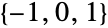 give HarmonicPolyLog:
GeneralizedPolyLog[{-1, 0, -1, -1, 0, 0, 1, 1, 0, 1, 1}, 1 / 2]Zero blocks separating nonzero letters convert a GeneralizedPolyLog to a MultiplePolyLog:
GeneralizedPolyLog[{0, I, 0, 0, 2I}, 1 / 2]The antisymmetric combination at letters  collapses to ArcTan[x]:
ArcTan[x] == (I / 2) * (GeneralizedPolyLog[{1 / (x I)}, 1] - GeneralizedPolyLog[{-1 / (x I)}, 1])//FullSimplifyThe antisymmetric combination at letters  collapses to ArcTanh:
ArcTanh[x] == (1 / 2) * (GeneralizedPolyLog[{-1 / x}, 1] - GeneralizedPolyLog[{1 / x}, 1])//FullSimplifySimilarly for ArcCot and ArcCoth:
ArcCot[x] == (I / 2)(GeneralizedPolyLog[{x / I}, 1] - GeneralizedPolyLog[{-x / I}, 1])//FullSimplifyArcCoth[x] == (1 / 2)(GeneralizedPolyLog[{-x}, 1] - GeneralizedPolyLog[{x}, 1])//FullSimplifyExpress Log of polynomial as a rational linear combination of a few GeneralizedPolyLog instances (plus a piecewise constant):
logPolynomial = Log[x ^ 3 - 2x ^ 2 - x + 1];logPolyAsGPL = ResourceFunction["LogAffineExpand"][logPolynomial, x] /. Log[1 + k_. * x] :> Inactive[GeneralizedPolyLog][{-1 / k}, x]PossibleZeroQ[Chop[N@Activate[(logPolynomial - logPolyAsGPL) /. x -> 10]]]Similarly for Log of a rational function:
logRational = Log[(2 - x) / (x ^ 3 - 2x ^ 2 - x + 1)];logRatAsGPL = ResourceFunction["LogAffineExpand"][logRational, x] /. Log[1 + k_. * x] :> Inactive[GeneralizedPolyLog][{-1 / k}, x]PossibleZeroQ[Chop[N@Activate[(logRational - logRatAsGPL) /. x -> 10]]]Express PolyLog[s,xn] as a linear combination of GeneralizedPolyLog:
polylog = PolyLog[2, x ^ 3];asGPL = polylog /. PolyLog[s_, x ^ n_] :> (n^s - 1Sum[PolyLog[s, Exp[2Pi I k / n]x], {k, 0, n - 1}]) /. PolyLog[p_, k_. * x] :> (-Inactive[GeneralizedPolyLog][Append[ConstantArray[0, p - 1], 1 / k], x])PossibleZeroQ[Chop[N@Activate[(polylog - asGPL) /. x -> 10]]]GeneralizedPolyLog appears as the limit of MultipleHarmonicNumber as the index goes to  :
:
MultipleHarmonicNumber[∞, {1, 1, 1, 1}, {1 / 2, 1 / 3, 1 / 4, 1 / 5}]Text
Wolfram Research (2026), GeneralizedPolyLog, Wolfram Language function, https://reference.wolfram.com/language/ref/GeneralizedPolyLog.html.
CMS
Wolfram Language. 2026. "GeneralizedPolyLog." Wolfram Language & System Documentation Center. Wolfram Research. https://reference.wolfram.com/language/ref/GeneralizedPolyLog.html.
APA
Wolfram Language. (2026). GeneralizedPolyLog. Wolfram Language & System Documentation Center. Retrieved from https://reference.wolfram.com/language/ref/GeneralizedPolyLog.html