EllipticThetaPrime[a,u,q]
gives the derivative with respect to u of the theta function ![TemplateBox[{a, u, q}, EllipticTheta]](Files/EllipticThetaPrime.en/24.png "TemplateBox[{a, u, q}, EllipticTheta]")
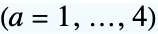 .
.
EllipticThetaPrime[a,q]
gives the theta constant ![TemplateBox[{a, 0, q}, EllipticThetaPrime]](Files/EllipticThetaPrime.en/26.png "TemplateBox[{a, 0, q}, EllipticThetaPrime]") .
.


EllipticThetaPrime
EllipticThetaPrime[a,u,q]
gives the derivative with respect to u of the theta function ![TemplateBox[{a, u, q}, EllipticTheta]](Files/EllipticThetaPrime.en/1.png "TemplateBox[{a, u, q}, EllipticTheta]")
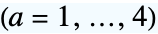 .
.
EllipticThetaPrime[a,q]
gives the theta constant ![TemplateBox[{a, 0, q}, EllipticThetaPrime]](Files/EllipticThetaPrime.en/3.png "TemplateBox[{a, 0, q}, EllipticThetaPrime]") .
.
Details
- Mathematical function, suitable for both symbolic and numerical manipulation.
- For certain special arguments, EllipticThetaPrime automatically evaluates to exact values.
- EllipticThetaPrime can be evaluated to arbitrary numerical precision.
- EllipticThetaPrime automatically threads over lists.
Examples
open all close allBasic Examples (3)
Scope (21)
Numerical Evaluation (4)
EllipticThetaPrime[2, 5, .5]EllipticThetaPrime[1, .4, .5]N[EllipticThetaPrime[3, 15, 1 / 3], 25]The precision of the output tracks the precision of the input:
EllipticThetaPrime[3, 8, .600055555555000055005]EllipticThetaPrime[2, .4 + I, .5I]Evaluate efficiently at high precision:
EllipticThetaPrime[2, 5, .5`100]//TimingEllipticThetaPrime[2, 5, .5`10000];//TimingSpecific Values (3)
EllipticThetaPrime[1, 0, 0]EllipticThetaPrime evaluates symbolically for special arguments:
Table[EllipticThetaPrime[j, z, 0], {j, 4}]Find a value of  for which EllipticThetaPrime[3,x,1/2]=2:
xval = x /. FindRoot[EllipticThetaPrime[3, x, 1 / 2] == 2, {x, 1}]//QuietPlot[EllipticThetaPrime[3, x, 1 / 2], {x, -1, 4}, Epilog -> Style[Point[{xval, EllipticThetaPrime[3, xval, 1 / 2]}], PointSize[Large], Red]]Visualization (2)
Plot the EllipticThetaPrime function for various parameters:
Plot[{EllipticThetaPrime[1, x, 1 / 2], EllipticThetaPrime[2, x, 1 / 2], EllipticThetaPrime[3, x, 1 / 2], EllipticThetaPrime[4, x, 1 / 2]}, {x, -5, 5}]![TemplateBox[{4, z, {1, /, 3}}, EllipticThetaPrime]](Files/EllipticThetaPrime.en/5.png "TemplateBox[{4, z, {1, /, 3}}, EllipticThetaPrime]")
ComplexContourPlot[Re[EllipticThetaPrime[4, z, 1 / 3]], {z, -3 - 3I, 3 + 3 I}, Contours -> 24]![TemplateBox[{4, z, {1, /, 3}}, EllipticThetaPrime]](Files/EllipticThetaPrime.en/6.png "TemplateBox[{4, z, {1, /, 3}}, EllipticThetaPrime]")
ComplexContourPlot[Im[EllipticThetaPrime[4, z, 1 / 3]], {z, -3 - 3I, 3 + 3 I}, Contours -> 24]Function Properties (10)
Real and complex domains of EllipticThetaPrime:
Table[FunctionDomain[EllipticThetaPrime[a, x, q], {x, q}], {a, 4}]Table[FunctionDomain[EllipticThetaPrime[a, z, q], {z, q}, Complexes], {a, 4}]EllipticThetaPrime is a periodic function with respect to  :
:
Table[FunctionPeriod[EllipticThetaPrime[a, z, q], z], {a, 4}]EllipticThetaPrime threads elementwise over lists:
EllipticThetaPrime[{1, 2, 3, 4}, z, q]EllipticThetaPrime[2, {Pi / 2, Pi}, 1 / 2]![TemplateBox[{1, x, q}, EllipticThetaPrime]](Files/EllipticThetaPrime.en/8.png "TemplateBox[{1, x, q}, EllipticThetaPrime]")
FunctionAnalytic[EllipticThetaPrime[1, x, q], x, Assumptions -> 0 < q < 1]For example, ![TemplateBox[{1, x, {1, /, 2}}, EllipticThetaPrime]](Files/EllipticThetaPrime.en/9.png "TemplateBox[{1, x, {1, /, 2}}, EllipticThetaPrime]") has no singularities or discontinuities:
has no singularities or discontinuities:
FunctionSingularities[EllipticThetaPrime[1, x, 1 / 2], x]//QuietFunctionDiscontinuities[EllipticThetaPrime[1, x, 1 / 2], x]//Quiet![TemplateBox[{1, x, {1, /, 2}}, EllipticThetaPrime]](Files/EllipticThetaPrime.en/10.png "TemplateBox[{1, x, {1, /, 2}}, EllipticThetaPrime]") is neither nondecreasing nor nonincreasing:
is neither nondecreasing nor nonincreasing:
FunctionMonotonicity[EllipticThetaPrime[1, x, 1 / 2], x]![TemplateBox[{1, x, {1, /, 2}}, EllipticThetaPrime]](Files/EllipticThetaPrime.en/11.png "TemplateBox[{1, x, {1, /, 2}}, EllipticThetaPrime]")
FunctionInjective[EllipticThetaPrime[1, x, 1 / 2], x]Plot[{EllipticThetaPrime[1, x, 1 / 2], 1}, {x, -6, 6}]![TemplateBox[{1, x, {1, /, 2}}, EllipticThetaPrime]](Files/EllipticThetaPrime.en/12.png "TemplateBox[{1, x, {1, /, 2}}, EllipticThetaPrime]")
FunctionSurjective[EllipticThetaPrime[1, x, 1 / 2], x]//QuietPlot[{EllipticThetaPrime[1, x, 1 / 2], -5}, {x, -6, 6}]![TemplateBox[{1, x, {1, /, 2}}, EllipticThetaPrime]](Files/EllipticThetaPrime.en/13.png "TemplateBox[{1, x, {1, /, 2}}, EllipticThetaPrime]") is neither non-negative nor non-positive:
is neither non-negative nor non-positive:
FunctionSign[EllipticThetaPrime[1, x, 1 / 2], x]![TemplateBox[{1, x, {1, /, 2}}, EllipticThetaPrime]](Files/EllipticThetaPrime.en/14.png "TemplateBox[{1, x, {1, /, 2}}, EllipticThetaPrime]") is neither convex nor concave:
is neither convex nor concave:
FunctionConvexity[EllipticThetaPrime[1, x, 1 / 2], x]TraditionalForm formatting:
EllipticThetaPrime[3, z, q] // TraditionalFormEllipticThetaPrime[a, q] // TraditionalFormIntegration (2)
Compute the indefinite integral using Integrate:
Integrate[EllipticThetaPrime[a, u, q], u]FullSimplify[D[%, u]]Integrate[EllipticThetaPrime[a, u, q], {u, 0, 5}]Generalizations & Extensions (1)
EllipticThetaPrime can be applied to power series:
EllipticThetaPrime[2, z, Log[1 + q] + O[q]^4]Applications (4)
Verify Jacobi's triple product identity through a series expansion:
Series[EllipticThetaPrime[1, q] - EllipticTheta[2, q]EllipticTheta[3, q]EllipticTheta[4, q], {q, 0, 9}]Green's function for the 1D heat equation with Dirichlet boundary conditions and initial condition  :
:
T[{x_, t_}, x0_, L_] := (1/2L) (EllipticTheta[3, (π/2L) (x - x0), E^-((π/L))^2t] - EllipticTheta[3, (π/2L)(x + x0), E^-((π/L))^2t])Calculate the temperature gradient:
gradT[{x_, t_}, x0_, L_] = D[T[{x, t}, x0, L], x]Plot the temperature gradient:
Plot3D[gradT[{x, t}, 0.6, 1], {x, 0, 1}, {t, 0.01, 0.1}, PlotRange -> All]Electrostatic force in a NaCl‐like crystal with point‐like ions:
fNaCl[{x_, y_, z_}] := (16/π)NIntegrate[{2 π t EllipticTheta[2, 2 π y, E^-t^2] EllipticTheta[2, 2 π z, E^-t^2]EllipticThetaPrime[2, 2 π x, E^-t^2], 2 π t EllipticTheta[2, 2 π x, E^-t^2]EllipticTheta[2, 2 π z, E^-t^2] EllipticThetaPrime[2, 2 π y, E^-t^2], 2 π t EllipticTheta[2, 2 π x, E^-t^2] EllipticTheta[2, 2 π y, E^-t^2]EllipticThetaPrime[2, 2 π z, E^-t^2]}, {t, 0, ∞}, PrecisionGoal -> 5]Plot the magnitude of the force in a plane through the crystal:
ListPlot3D[Table[Norm[fNaCl[{x, y, 0.3}]], {x, 0, 1, 1 / 10}, {y, 0, 1, 1 / 10}]]//QuietThe canonical rotational distribution function for linear molecules  :
:
Ω[β_] := (1/2) - Subsuperscript[∫, 0, ∞](1/8 Sqrt[π] t^3 / 2)E^-t (-4 t EllipticTheta[3, 0, E^-(β (4 t + β)/4 t)] + β EllipticThetaPrime^(0, 1, 0)[3, 0, E^-(β (4 t + β)/4 t)])ⅆtPlot a numerical approximation of the partition function:
ListLinePlot[Table[Ω[β] /. Integrate[a_, {t, b_, c_}] :> NIntegrate[a, {t, 10 ^ -3, 10}], {β, 1 / 4, 3, 1 / 4}]]Possible Issues (4)
Machine-precision input is insufficient to give a correct answer:
EllipticThetaPrime[1, 10. ^ 30, 1 / Pi]Use arbitrary-precision arithmetic to obtain the correct result:
N[EllipticThetaPrime[1, 10 ^ 30, 1 / Pi], 20]The first argument must be an explicit integer between 1 and 4:
EllipticThetaPrime[1 + (E + 1) ^ 2 - E ^ 2 - 2E - 1, 3., 1 / 2]Simplify[%]EllipticThetaPrime has the attribute NHoldFirst:
Attributes[EllipticThetaPrime]Different argument conventions exist for theta functions:
{Plot[EllipticThetaPrime[1, z, 1 / 2], {z, 0, 2π}],
Plot[EllipticThetaPrime[1, (z/2π), 1 / 2], {z, 0, 2π}]}{Plot[EllipticThetaPrime[1, 2, q], {q, 0.1, 0.8}],
Plot[EllipticThetaPrime[1, 2, Exp[I π (I τ)]], {τ, 0.1, 0.8}]}Neat Examples (1)
Visualize a function with a boundary of analyticity:
Module[{f, R = 0.99},
	f[z_ ? NumberQ] := If[Abs[z] > R, 0, Sin[Arg[EllipticThetaPrime[2, 1, z]] / 2]^2];
DensityPlot[f[qx + I qy], {qx, qy}∈Disk[{0, 0}, R], Frame -> False, PlotPoints -> 90, ColorFunction -> (Hue[2.72 #]&)]]Related Links

 MathWorld
Text
Wolfram Research (1996), EllipticThetaPrime, Wolfram Language function, https://reference.wolfram.com/language/ref/EllipticThetaPrime.html (updated 2017).
CMS
Wolfram Language. 1996. "EllipticThetaPrime." Wolfram Language & System Documentation Center. Wolfram Research. Last Modified 2017. https://reference.wolfram.com/language/ref/EllipticThetaPrime.html.
APA
Wolfram Language. (1996). EllipticThetaPrime. Wolfram Language & System Documentation Center. Retrieved from https://reference.wolfram.com/language/ref/EllipticThetaPrime.html