finds the singularities of  for x∈Reals.
FunctionSingularities[f,x,dom]
finds the singularities of  for x∈dom.
FunctionSingularities[{f1,f2,…},{x1,x2,…},dom]
finds the singularities of  for x1,x2,…∈dom.


FunctionSingularities
finds the singularities of  for x∈Reals.
FunctionSingularities[f,x,dom]
finds the singularities of  for x∈dom.
FunctionSingularities[{f1,f2,…},{x1,x2,…},dom]
finds the singularities of  for x1,x2,…∈dom.
Details
- Function singularities are typically used to either find regions where a function is guaranteed to be analytic or to find points and curves where special analysis needs to be performed.
- FunctionSingularities gives an implicit description of a set
 such that
  is analytic in
  . The set
  is not guaranteed to be minimal.
 - The resulting implicit description consists of equations, inequalities, domain specifications and logical combinations of these suitable for use in functions such as Reduce and Solve, etc.
- There are several sources for singularities, including Laurent series representation, multivalued functions, and piecewise and partial definitions of functions.
- Singularities from the Laurent series representation
 where
where  is the location of the isolated singularity:
 -
removable singularity  for
for  , e.g.
  for
for 
pole singularity  for
for 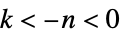 , e.g.
 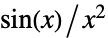 for
for 
essential singularity  for infinitely many
  , e.g.
  for
for 
inessential singularity a pole or removable singularity - Singularities coming from the selection of principal branches of multivalued functions:
-
branch point point where branches of a multivalued function come together, e.g.  for
for 
branch cut curve along which a function is discontinuous in order to get a single valued function, e.g.  for
for 
- Singularities coming from piecewise-defined functions or natural domain of definition:
-
piecewise piecewise defined function, e.g.  for
for 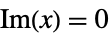
domain of definition complement of domain of definition, e.g. ![TemplateBox[{1, {1, /, 2}, x}, EllipticTheta]](Files/FunctionSingularities.en/28.png "TemplateBox[{1, {1, /, 2}, x}, EllipticTheta]") for
for ![TemplateBox[{x}, Abs]>=1](Files/FunctionSingularities.en/29.png "TemplateBox[{x}, Abs]>=1")
- For a multivariate function, the singularities are taken to be the singularities for each variable separately.
- Possible values for dom are Reals and Complexes.
Examples
open all close allBasic Examples (4)
Find the singularities of a real univariate function:
FunctionSingularities[Tan[x], x]Find the singularities of a complex univariate function:
FunctionSingularities[Log[x], x, Complexes]Find the singularities of a real multivariate function:
FunctionSingularities[Beta[x, y], {x, y}]Find the singularities of a complex multivariate function:
FunctionSingularities[ArcTan[x ^ y], {x, y}, Complexes]Scope (6)
Singularities of a real univariate function:
FunctionSingularities[Gamma[x], x]Find the singular points between  and
and  :
:
Solve[% && -5 ≤ x ≤ 5, x, Reals]Plot[Gamma[x], {x, -5, 5}, Epilog -> {PointSize[Medium], Red, Point[{x, 0}] /. %}]Singularities of a function composition:
FunctionSingularities[Abs[Tan[2Sin[x]]], x]Find the singular points between  and
and  :
:
Solve[% && -2Pi ≤ x ≤ 2Pi, x, Reals]Plot[Abs[Tan[2Sin[x]]], {x, -2Pi, 2Pi}, Epilog -> {PointSize[Medium], Red, Point[{x, 0}] /. %}]Singularities over the reals include the points where the function is not real valued:
FunctionSingularities[Sqrt[x], x]Singularities of a complex univariate function:
FunctionSingularities[ArcTan[z ^ 2], z, Complexes]Compute the singularities in terms of Re[z] and Im[z]:
Reduce[%, z]Show[{ComplexPlot[ArcTan[z ^ 2] / z, {z, -2 - 2I, 2 + 2I}], Region[Style[ImplicitRegion[%, {Re[z], Im[z]}], Red]]}]Singularities of a real multivariate function:
FunctionSingularities[(x ^ 2 + y ^ 2)Csc[x y], {x, y}]Show[{Plot3D[(x ^ 2 + y ^ 2)Csc[x y], {x, -3, 3}, {y, -3, 3}], ContourPlot3D@@{%, {x, -3, 3}, {y, -3, 3}, {z, -40, 40}, ContourStyle -> {Red, Opacity[0.7]}, Mesh -> False}}]Singularities of a complex mapping:
FunctionSingularities[{Tanh[x - y], Coth[x + y]}, {x, y}, Complexes]Applications (6)
Basic Applications (5)

f = Tan[x ^ 2];FunctionSingularities[f, x]Find the singular points between  and
and  :
:
Solve[% && -5 ≤ x ≤ 5, x, Reals]Plot[f, {x, -5, 5}, Epilog -> {Red, Thin, Dotted, InfiniteLine[{x, 0}, {0, 1}] /. %}]![max(log(TemplateBox[{x}, Abs]+1),x sin(x))](Files/FunctionSingularities.en/37.png "max(log(TemplateBox[{x}, Abs]+1),x sin(x))")
f = Max[Log[Abs[x] + 1], x Sin[x]];FunctionSingularities[f, x]Find the singular points between  and
and  :
:
Solve[% && -20 ≤ x ≤ 20, x, Reals]The function  is continuous but not analytic:
Plot[f, {x, -20, 20}, Epilog -> {Red, Thin, Dotted, InfiniteLine[{x, 0}, {0, 1}] /. %}]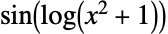
f = Sin[Log[x ^ 2 + 1]];FunctionSingularities[f, x]Show that there are no singularities:
Reduce[%, x, Reals]
Plot[f, {x, -10, 10}]Find the singularities of the complex function 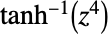 :
:
f = ArcTanh[z ^ 4];FunctionSingularities[f, z, Complexes]Compute the singularities in terms of Re[z] and Im[z]:
Reduce[%, z]Show[{ComplexPlot[f, {z, -2 - 2I, 2 + 2I}], Region[Style[ImplicitRegion[%, {{Re[z], -2, 2}, {Im[z], -2, 2}}], Red]]}]Find the singularities of  given the singularities of
  and
and  :
:
f[y_] := 1 / (y ^ 2 - 1)
g[x_] := Csc[x]
Suppose the singularities of  and
and  are contained in solution sets of
  and
and  :
:
Φ = FunctionSingularities[f[y], y]Ψ = FunctionSingularities[g[x], x]The singularities of  are contained in the solution set of
  :
:
FunctionSingularities[f[g[x]], x](Φ /. y -> g[x]) || ΨCalculus (1)
If  is analytic at
  , then
  is the limit of its Taylor series in a neighborhood of
  :
:
f = (x Sin[x ^ 2] ^ 2) ^ (1 / 5);FunctionSingularities[f, x]

% /. x -> 1Compute the series of  at
at  to order
  :
:
s = Series[f, {x, 1, 3}]//Normal


Plot[{f, s}, {x, 0, 3}]Properties & Relations (3)
The function is analytic outside the set given by FunctionSingularities:
FunctionSingularities[Tan[x], x]Use FunctionAnalytic to check the analyticity:
FunctionAnalytic[{Tan[x], Not[%]}, x]FunctionDiscontinuities gives a set outside which the function is continuous:
FunctionDiscontinuities[Abs[x] / (x ^ 2 - 1), x]The set of discontinuities is a subset of the set of singularities:
FunctionSingularities[Abs[x] / (x ^ 2 - 1), x]Show[{Plot[Abs[x] / (x ^ 2 - 1), {x, -2, 2}], ListPlot[...]}]FunctionSingularities finds a condition satisfied by all singularities:
FunctionSingularities[Sin[x] / (x ^ 3 - x), x]Use SolveValues to find the singularities:
SolveValues[%, x]Use FunctionPoles to find the pole singularities and their multiplicities:
FunctionPoles[Sin[x] / (x ^ 3 - x), x]Possible Issues (2)
The singularity set returned may not be minimal:
FunctionSingularities[UnitStep[x - 1] UnitStep[-x], x]The function is identically zero, hence it has no singularities:
PiecewiseExpand[UnitStep[x - 1] UnitStep[-x]]When some singularity information is missing, an error message is given and the known singularities are returned:
FunctionSingularities[f[x] + Tan[x], x]
Text
Wolfram Research (2020), FunctionSingularities, Wolfram Language function, https://reference.wolfram.com/language/ref/FunctionSingularities.html.
CMS
Wolfram Language. 2020. "FunctionSingularities." Wolfram Language & System Documentation Center. Wolfram Research. https://reference.wolfram.com/language/ref/FunctionSingularities.html.
APA
Wolfram Language. (2020). FunctionSingularities. Wolfram Language & System Documentation Center. Retrieved from https://reference.wolfram.com/language/ref/FunctionSingularities.html