ProbabilityDistribution[pdf,{x,xmin,xmax}]
represents the continuous distribution with PDF pdf in the variable x where the pdf is taken to be zero for  and
and 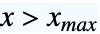 .
.
ProbabilityDistribution[pdf,{x,xmin,xmax,1}]
represents the discrete distribution with PDF pdf in the variable x where the pdf is taken to be zero for  and
and 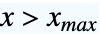 .
.


ProbabilityDistribution
ProbabilityDistribution[pdf,{x,xmin,xmax}]
represents the continuous distribution with PDF pdf in the variable x where the pdf is taken to be zero for  and
and 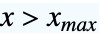 .
.
ProbabilityDistribution[pdf,{x,xmin,xmax,1}]
represents the discrete distribution with PDF pdf in the variable x where the pdf is taken to be zero for  and
and 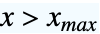 .
.
ProbabilityDistribution[pdf,{x,…},{y,…},…]
represents a multivariate distribution with PDF pdf in the variables x, y, …, etc.
ProbabilityDistribution[{"CDF",cdf},…]
represents a probability distribution with CDF given by cdf.
ProbabilityDistribution[{"SF",sf},…]
represents a probability distribution with survival function given by sf.
ProbabilityDistribution[{"HF",hf},…]
represents a probability distribution with hazard function given by hf.
Details and Options
- ProbabilityDistribution is used to define a custom parametric distribution using one of the distribution functions.
- For a multivariate ProbabilityDistribution definition, all variables need to be either discrete or continuous; no mixed cases can occur.
- ProbabilityDistribution[pdf,…] is equivalent to ProbabilityDistribution[{"PDF", pdf},…].
- ProbabilityDistribution takes the following options:
-
Assumptions True assumptions on parameters Method Automatic method to use - ProbabilityDistribution[…,Assumptions->assum] specifies the assumptions assum for parameters in the distribution function or domain specification. »
- The probability density function pdf in the definition of ProbabilityDistribution is assumed to be valid. In particular, it is assumed that it has been normalized to unity.
- The pdf can be normalized by setting Method->"Normalize" while defining a ProbabilityDistribution. »
- ProbabilityDistribution can be used with such functions as Mean, CDF, RandomVariate, etc.
Examples
open all close allBasic Examples (1)
Define a continuous probability distribution:
𝒟 = ProbabilityDistribution[Sqrt[2] / Pi / (1 + x ^ 4), {x, -Infinity, Infinity}];PDF[𝒟, x]Plot[%, {x, -4, 4}, Filling -> Axis]Cumulative distribution function:
CDF[𝒟, x]Plot[%, {x, -4, 4}, Filling -> Axis, PlotRange -> {0, 1}]Mean[𝒟]Variance[𝒟]Scope (13)
Distribution Specification (8)
Define a univariate continuous probability distribution:
𝒟 = ProbabilityDistribution[3(1 - x ^ 2) / 4, {x, -1, 1}];Plot[PDF[𝒟, x]//Evaluate, {x, -2, 2}, Filling -> Axis]Define a univariate discrete probability distribution:
𝒟 = ProbabilityDistribution[2 ^ (-x - 1), {x, 0, ∞, 1}];Cumulative distribution function:
DiscretePlot[CDF[𝒟, x]//Evaluate, {x, 0, 8}, ExtentSize -> Right]Define a multivariate continuous distribution:
𝒟 = ProbabilityDistribution[(3 E^-(x^2/2) y^2/Sqrt[2 π]), {x, -∞, ∞}, {y, 0, 1}];Verify that the integral of the PDF over the domain of the distribution is 1:
Integrate[PDF[𝒟, {x, y}], {x, -∞, ∞}, {y, 0, 1}]Define a multivariate discrete distribution:
𝒟 = ProbabilityDistribution[(2^x y^2/55 E^2 x!), {x, 0, ∞, 1}, {y, 0, 5, 1}];Compute the expectation for an expression in this distribution:
Expectation[x ^ 2 + 3y, {x, y}𝒟]Formula distribution specified by its CDF:
𝒟 = ProbabilityDistribution[{"CDF", Piecewise[{{-2 + x, 2 ≤ x ≤ 3}, {1, x > 3}}, 0]}, {x, -∞, ∞}];Mean and variance for the distribution:
{Mean[𝒟], Variance[𝒟]}Formula distribution specified by its survival function:
𝒟 = ProbabilityDistribution[{"SF", Piecewise[{{1 - 2 (-2 + x)^2, 2 ≤ x ≤ (5/2)}, {2 (3 - x)^2, (5/2) < x ≤ 3}, {1, x < 2}}, 0]}, {x, 2, 3}];Kurtosis for the distribution:
Kurtosis[𝒟]//NCompare with the value obtained by using a random sample from the distribution:
data = RandomVariate[𝒟, 10 ^ 3];Kurtosis[data]Define probability distribution by its hazard function:
𝒟 = ProbabilityDistribution[{"HF", x / (x ^ 2 + 1)}, {x, 0, Infinity}];Probability[t > τ, t𝒟]//SimplifyPlot[%, {τ, 0, 5}]Specify assumptions on a parameter in the definition of a formula distribution:
𝒟 = ProbabilityDistribution[UnitTriangle[x - a], {x, -2, 2}, Assumptions -> -1 < a < 1];PDF[𝒟, x]Table[Plot[PDF[𝒟, x]//Evaluate, {x, -2, 2}, Filling -> Axis], {a, -1, 1}]Verify that the integral of the PDF is 1 under the given assumptions:
Integrate[PDF[𝒟, x], {x, -2, 2}, Assumptions -> -1 < a < 1]Continuous Univariate Distributions (2)
Define a two-sided exponential distribution:
𝒟 = ProbabilityDistribution[Piecewise[{{λ Exp[λ x] / 3, x < 0}, {2 / 3 λ Exp[-λ x], x ≥ 0}}], {x, -∞, ∞}, Assumptions -> λ > 0];Plot[Table[PDF[𝒟, x], {λ, {0.3, 0.7, 1.5}}]//Evaluate, {x, -3, 3}, Filling -> Axis, PlotRange -> All]PDF[𝒟, x]Cumulative distribution function:
Plot[Table[CDF[𝒟, x], {λ, {0.3, 0.7, 1.5}}]//Evaluate, {x, -3, 3}, Filling -> Axis, PlotRange -> All]CDF[𝒟, x]Plot[Table[Quantile[𝒟, p], {λ, {0.3, 0.7, 1.5}}]//Evaluate, {p, 0.01, 0.99}, Filling -> Axis, PlotRange -> All]Mean[𝒟]Variance[𝒟]Define a distribution with PDF given in terms of DiracDelta:
𝒟 = ProbabilityDistribution[Underoverscript[∑, k = -3, 3](1/7) DiracDelta[x - k], {x, -∞, ∞}];Cumulative distribution function:
cdf = CDF[𝒟, x];Plot[cdf, {x, -4, 4}, Filling -> Axis, PlotRange -> All, Exclusions -> None]cdfPlot[Quantile[𝒟, p]//Evaluate, {p, 0.01, 0.99}, Filling -> Axis, PlotRange -> All]Discrete Univariate Distributions (1)
A discrete distribution with hypergeometric term PDF:
𝒟 = ProbabilityDistribution[16 ^ (2x + 1) / (Sinh[16](2x + 1)!),
{x, 0, ∞, 1}];DiscretePlot[PDF[𝒟, x]//Evaluate, {x, 0, 15}, ExtentSize -> 1 / 2]PDF[𝒟, x]Cumulative distribution function:
DiscretePlot[CDF[𝒟, x]//Evaluate, {x, 0, 15}, ExtentSize -> Right]CDF[𝒟, x]Mean[𝒟]Variance[𝒟]MomentGeneratingFunction[𝒟, t]Continuous Multivariate Distributions (1)
A bivariate triangular distribution:
𝒟 = ProbabilityDistribution[PDF[TriangularDistribution[{2, 5}], x]
     PDF[TriangularDistribution[{3, 7}], y], {x, 0, ∞},
{y, 0, ∞}];Plot3D[PDF[𝒟, {x, y}]//Evaluate, {x, 1, 6}, {y, 2, 8}, Exclusions -> None, PlotRange -> All]PDF[𝒟, {x, y}]Cumulative distribution function:
Plot3D[CDF[𝒟, {x, y}]//Evaluate, {x, 1, 6}, {y, 2, 8}, Exclusions -> None, PlotRange -> All]CDF[𝒟, {x, y}]Mean[𝒟]Variance[𝒟]CumulantGeneratingFunction[𝒟, {u, v}]Discrete Multivariate Distributions (1)
A discrete bivariate rectangular distribution:
𝒟 = ProbabilityDistribution[PDF[DiscreteUniformDistribution[{2, 7}], x]
     PDF[GeometricDistribution[1 / 5], y], {x, 0, ∞, 1},
{y, 0, ∞, 1}];DiscretePlot3D[PDF[𝒟, {x, y}]//Evaluate, {x, 0, 10}, {y, 0, 10}, ExtentSize -> 1 / 2]PDF[𝒟, {x, y}]Cumulative distribution function:
DiscretePlot3D[CDF[𝒟, {x, y}]//Evaluate, {x, 0, 10}, {y, 0, 10}, ExtentSize -> Right]Mean[𝒟]Variance[𝒟]CharacteristicFunction[𝒟, {u, v}]Options (2)
Assumptions (1)
Method (1)
Normalize a continuous probability distribution:
𝒟 = ProbabilityDistribution[x, {x, 0, 1}, Method -> "Normalize"]Verify that the PDF of the distribution is normalized to unity:
𝒟 /. {ProbabilityDistribution -> Integrate}Normalize a multivariate probability distribution:
𝒟 = ProbabilityDistribution[x(1 - x y(1 - y )), {x, 0, 1}, {y, 0, 1}, Method -> "Normalize"]𝒟 /. {ProbabilityDistribution -> Integrate}Applications (14)
Define a continuous univariate distribution using its probability density function:
𝒟 = ProbabilityDistribution[Piecewise[{{x ^ 2 / 9, 0 < x ≤ 3}}], {x, -∞, ∞}];Obtain the cumulative distribution function for this distribution:
CDF[𝒟, x]Plot[CDF[𝒟, x]//Evaluate, {x, -1, 5}, Filling -> Axis]Study the statistical properties of the distribution:
{Mean[𝒟], Variance[𝒟], Kurtosis[𝒟]}MomentGeneratingFunction[𝒟, t]Find the probability of an event:
Probability[x ^ 2 - x > 1, x𝒟]N[%]NProbability[x ^ 2 - x > 1, x𝒟]Compute a conditional expectation:
Expectation[Conditioned[x ^ 3, x > 1], x𝒟]NExpectation[Conditioned[x ^ 3, x > 1], x𝒟]Compute the probability that a random variable is within one standard deviation from the mean:
𝒟 = ProbabilityDistribution[Sqrt[2] / Pi / (1 + x ^ 4), {x, -∞, ∞}];μ = Mean[𝒟];
σ = StandardDeviation[𝒟];
pdf = PDF[𝒟, x];Show[Plot[pdf, {x, -3, μ - σ}, Filling -> Axis, AxesOrigin -> {0, 0}], Plot[pdf, {x, μ - σ, μ + σ}], Plot[pdf, {x, μ + σ, 3}, Filling -> Axis, AxesOrigin -> {0, 0}], PlotRange -> {0, 1 / 2}, Ticks -> {Automatic, None}]Probability[μ - σ < x < μ + σ, x𝒟]N[%]Probability of being within two standard deviations from the mean:
Probability[μ - 2σ < x < μ + 2σ, x𝒟]N[%]Package it up as a function using NProbability:
percentage[n_] := NProbability[μ - n σ < x < μ + n σ, x 𝒟]Table[percentage[n], {n, 1, 3, 1 / 3}]Estimate the value of a parameter in ProbabilityDistribution:
r = {0.2, 0.07, 0.04, 0.14, 0.21, 0.23, 0.16, 0.06, 0.44, 1.025};𝒟 = ProbabilityDistribution[a E ^ (-a x), {x, 0, ∞}, Assumptions -> a > 0];EstimatedDistribution[r, 𝒟]Muth distribution is related to GompertzMakehamDistribution and has a PDF:
PDF[GompertzMakehamDistribution[b, 1 / b, -b, 0], x]However, the third parameter of a GompertzMakehamDistribution is required to be positive:
With[{b = 1 / 2}, PDF[GompertzMakehamDistribution[b, 1 / b, -b, 0], x]]
MuthDistribution[b_] = ProbabilityDistribution[(Exp[b x] - b) Exp[b x - (Exp[b x] - 1) / b], {x, 0, Infinity}, Assumptions -> 1 ≥ b ≥ 0];Plot[Table[PDF[MuthDistribution[b], x], {b, {.2, .5, .7}}]//Evaluate, {x, 0, 3}, Filling -> Axis]Plot[Table[HazardFunction[MuthDistribution[b], x], {b, {.2, .5, .7}}]//Evaluate, {x, 0, 3}, Filling -> Axis]A double-sided power distribution is used in economics:
TwoSidedPowerDistribution[n_, θ_] = ProbabilityDistribution[Piecewise[{{n (x / θ) ^ (n - 1), 0 < x < θ}, {n ((1 - x) / (1 - θ)) ^ (n - 1), θ < x < 1}}, 0], {x, 0, 1}, Assumptions -> 0 < θ < 1 && n > 0];Plot[Table[PDF[TwoSidedPowerDistribution[3, θ], x], {θ, {0.2, 0.5, 1}}]//Evaluate, {x, 0, 1}, Filling -> Axis, Exclusions -> None]sk[n_, θ_] = Skewness[TwoSidedPowerDistribution[n, θ]]//FullSimplify[#, 0 < θ < 1]&ks[n_, θ_] = Kurtosis[TwoSidedPowerDistribution[n, θ]]//FullSimplify[#, 0 < θ < 1]&ParametricPlot[{sk[n, θ], ks[n, θ]}, {θ, 0.1, 0.9}, {n, 1, 6}, FrameLabel -> {Skewness, Kurtosis}]Create a uniform distribution over the unit disk:
𝒟 = ProbabilityDistribution[Piecewise[{{1 / π, 0 ≤ Sqrt[x^2 + y^2] ≤ 1}}], {x, -1, 1}, {y, -1, 1}];Plot3D[PDF[𝒟, {x, y}]//Evaluate, {x, -1, 1}, {y, -1, 1}]Find each MarginalDistribution:
PDF[MarginalDistribution[𝒟, 1], x]PDF[MarginalDistribution[𝒟, 2], y]If dist is the joint distribution of the vector {x,y}, then x and y are not independent:
PDF[𝒟, {x, y}] === PDF[MarginalDistribution[𝒟, 1], x]PDF[MarginalDistribution[𝒟, 2], y]//FullSimplifyIn a reliability study the CDF for the lifetime distribution is given by  with
with 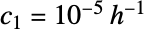 and
and  . What is the mean time to failure (MTTF) for the system? MTTF is also known as the mean:
lifetimeDistribution = ProbabilityDistribution[{"CDF", 1 - 0.7Exp[-10^-5t] - 0.3Exp[-2 10^-5t]}, {t, 0, ∞}]Hence the mean time to failure is:
Mean[lifetimeDistribution]Change point distribution is characterized by a two-value hazard function:
ChangePointDistribution[λ0_, λ1_, τ_] = ProbabilityDistribution[Piecewise[{{λ0 Exp[-λ0 x], 0 < x ≤ τ}, {λ1 Exp[-λ0 τ - λ1 (x - τ)], x > τ}}], {x, 0, ∞}, Assumptions -> τ > 0 && λ0 > 0 && λ1 > 0];HazardFunction[ChangePointDistribution[λ0, λ1, τ], x]//FullSimplifyThe probability density function is discontinuous at  :
:
Plot[Table[PDF[ChangePointDistribution[λ0, 12, 2], x], {λ0, {1, 1.5, 2}}]//Evaluate, {x, 0, 3}, Filling -> Axis]The limiting case is ExponentialDistribution:
Limit[PDF[ChangePointDistribution[λ0, λ1, τ], x], τ -> 0]PDF[ExponentialDistribution[λ1], x]FullSimplify[% - %%, x ≠ 0]Limit[PDF[ChangePointDistribution[λ0, λ1, τ], x], τ -> ∞]PDF[ExponentialDistribution[λ0], x]FullSimplify[% - %%, x ≠ 0]Define a joint probability density function for two variables  and
and  :
:
f[x_, y_] = Piecewise[{{k(x + 3y), 0 < x < 10 && 0 < y < 10}}]Determine the value of the normalization factor  :
:
{sol} = Solve[Integrate[f[x, y], {x, -∞, ∞}, {y, -∞, ∞}] == 1, k]The joint probability distribution is given by:
𝒟 = ProbabilityDistribution[f[x, y] /. sol, {x, -∞, ∞}, {y, -∞, ∞}];Compute the probability of an event in this distribution:
Probability[x < 7 && y > 2, {x, y}𝒟]N[%]Obtain the numerical value of the probability directly:
NProbability[x < 7 && y > 2, {x, y}𝒟]The waiting times for buying tickets and for buying popcorn at a movie theater are independent and both follow an exponential distribution. The average waiting time for buying a ticket is 10 minutes and the average waiting time for buying popcorn is 5 minutes. Find the probability that a moviegoer waits for a total of less than 25 minutes before taking his or her seat:
ticketwait[x_] = PDF[ExponentialDistribution[1 / 10], x]popcornwait[y_] = PDF[ExponentialDistribution[1 / 5], y]totalwait[x_, y_] = PiecewiseExpand[ticketwait[x]popcornwait[y]]𝒟 = ProbabilityDistribution[totalwait[x, y], {x, -∞, ∞}, {y, -∞, ∞}];Probability[x + y < 25, {x, y}𝒟]//ExpandN[%]Obtain the numerical value of the probability directly:
NProbability[x + y < 25, {x, y}𝒟]A factory produces cylindrically shaped roller bearings. The diameters of the bearings are normally distributed with mean 5 cm and standard deviation 0.01 cm. The lengths of the bearings are normally distributed with mean 7 cm and standard deviation 0.01 cm. Assuming that the diameter and the length are independently distributed, find the probability that a bearing has either diameter or length that differs from the mean by more than 0.02 cm:
diameter[x_] = PDF[NormalDistribution[5, 0.01], x]length[y_] = PDF[NormalDistribution[7, 0.01], y]𝒟 = ProbabilityDistribution[diameter[x]length[y], {x, -∞, ∞}, {y, -∞, ∞}];Plot3D[PDF[𝒟, {x, y}]//Evaluate, {x, 4.95, 5.05}, {y, 6.95, 7.05}, PlotRange -> All, ColorFunction -> "Rainbow"]1 - NProbability[Abs[x - 5] < 0.02 && Abs[y - 7] < 0.02, {x, y}𝒟]Define the distribution corresponding to an electron's radial density in a hydrogen atom:
HydrogenAtomRadialDistribution[n_, l_, m_] := ProbabilityDistribution[((n - l - 1)!/2n(n + l)!)Exp[-r]r^2l + 2LaguerreL[n - l - 1, 2l + 1, r] ^ 2, {r, 0, ∞}, Assumptions -> {n, m, l}∈Integers && n > 0 && 0 ≤ l < n && -l ≤ m ≤ l]Generate random numbers from an instance of this distribution:
ℛ𝒟 = HydrogenAtomRadialDistribution[4, 1, 1];radii = RandomVariate[ℛ𝒟, 10 ^ 5];Compare a sample histogram to the distribution density plot:
Show[Histogram[radii, 50, "PDF"], Plot[PDF[ℛ𝒟, r], {r, 0, 30}, PlotStyle -> Thick]]Find the mean radius and its standard deviation:
{Mean[ℛ𝒟], StandardDeviation[ℛ𝒟]}Define a joint probability distribution on a square:
j𝒟 = ProbabilityDistribution[(1/4)(1 + x y(x^2 - y^2)), {x, -1, 1}, {y, -1, 1}];Plot3D[PDF[j𝒟, {x, y}]//Evaluate, {x, -1, 1}, {y, -1, 1}]Each marginal distribution is the uniform distribution on the interval from  to
to  :
:
PDF[MarginalDistribution[j𝒟, 1], x]PDF[MarginalDistribution[j𝒟, 2], y]Verify that random variate  is equal in distribution to the sum of independent uniforms, using characteristic functions:
CharacteristicFunction[TransformedDistribution[x + y, {x, y}j𝒟], t]This is equal to the product of characteristic functions of marginals, i.e.  :
:
% == CharacteristicFunction[MarginalDistribution[j𝒟, 1], t]CharacteristicFunction[MarginalDistribution[j𝒟, 2], t]This is possible because  and
and  are uncorrelated, albeit dependent:
Correlation[j𝒟, 1, 2]Compute properties for the slice distribution at time  of an inhomogeneous Poisson process with intensity function
  :
:
𝒟[μ_, t_] := ProbabilityDistribution[(μ ^ k Exp[-μ]/k!), {k, 0, ∞, 1}]The mean  is the integral of the intensity function up to time
  :
:
m = Integrate[λ[u], {u, 0, t}];{Mean[𝒟[μ, t]], Variance[𝒟[μ, t]]} /. μ -> mCompare to the continuous time version of the process:
𝒫 = InhomogeneousPoissonProcess[λ[u], u];{Mean[𝒫[t]], Variance[𝒫[t]]}Properties & Relations (3)
The first argument of ProbabilityDistribution is the PDF by default:
𝒟 = ProbabilityDistribution[Sqrt[2] / Pi / (1 + x ^ 4), {x, -∞, ∞}];First[%]PDF[𝒟, x]The integral of the PDF over the distribution domain needs to be unity:
Integrate[PDF[𝒟, x], {x, -∞, ∞}]ProbabilityDistribution decomposes into absolutely continuous and discrete parts:
cdf = CDF[MixtureDistribution[{1 / 3, 2 / 3}, {LaplaceDistribution[0, 1], TransformedDistribution[x - 2, xBinomialDistribution[4, 1 / 3]]}], z]ProbabilityDistribution[{CDF, cdf}, {z, -∞, ∞}]PDF can be given as InterpolatingFunction:
pts = MapAt[# + 2&, {{0, 0}, {4 / 3, 1}, {2, 3}, {3, 4}, {4, 3}, {5, 0}, {6, 0}, {7, 1 / 2}}, {All, 2}];if = Interpolation[pts, Method -> "Spline", InterpolationOrder -> 4];
With[{int = NIntegrate[if[x], {x, 0, 7}]},
if = Interpolation[MapAt[# / int&, pts, {All, 2}], Method -> "Spline", InterpolationOrder -> 4]]dist = ProbabilityDistribution[if[x], {x, 0, 7}];sample = RandomVariate[dist, 10 ^ 6];Show[
Histogram[sample, 100, "PDF"],
Plot[if[x], {x, 0, 7}]]Possible Issues (5)
Probability density function used to define the distribution is assumed to be valid:
invalidDist = ProbabilityDistribution[x - 1, {x, 0, 1}];The specified PDF is invalid since it is not non-negative and not normalized to 1:
invalidDist /. {ProbabilityDistribution -> Integrate}Sampling from this distribution may generate variates outside the distribution domain:
RandomVariate[invalidDist, 10]The PDF of this distribution is not normalized to unity:
𝒟 = ProbabilityDistribution[x ^ 2, {x, 0, 1}];nconst = Integrate[PDF[𝒟, x], {x, 0, 1}]𝒟1 = ProbabilityDistribution[x ^ 2 / nconst, {x, 0, 1}];Integrate[PDF[𝒟1, x], {x, 0, 1}]𝒟2 = ProbabilityDistribution[x ^ 2, {x, 0, 1}, Method -> "Normalize"];Integrate[PDF[𝒟2, x], {x, 0, 1}]Normalization will not change the sign of the PDF:
ProbabilityDistribution[x - 1, {x, 0, 1}, Method -> "Normalize"]
Normalization will not be meaningful when the integral is not defined:
ProbabilityDistribution[Exp[x ^ 2], {x, 0, ∞}, Method -> "Normalize"]

Use TransformedDistribution to create a discrete probability distribution with noninteger support:
With[{x0 = 0, x1 = 1, dx = 1 / 12}, TransformedDistribution[x0 + dx * k, Distributed[k, ProbabilityDistribution[Piecewise[{{0.25, x == 1 / 12}, {0.5, x == 1 / 6}, {0.25, x == 1 / 4}}] /. x -> x0 + dx * k, {k, 0, (x1 - x0) / dx, 1}]]]]PDF[%, 1 / 12]Text
Wolfram Research (2010), ProbabilityDistribution, Wolfram Language function, https://reference.wolfram.com/language/ref/ProbabilityDistribution.html (updated 2015).
CMS
Wolfram Language. 2010. "ProbabilityDistribution." Wolfram Language & System Documentation Center. Wolfram Research. Last Modified 2015. https://reference.wolfram.com/language/ref/ProbabilityDistribution.html.
APA
Wolfram Language. (2010). ProbabilityDistribution. Wolfram Language & System Documentation Center. Retrieved from https://reference.wolfram.com/language/ref/ProbabilityDistribution.html