

SpatialObservationRegionQ
SpatialObservationRegionQ[reg]
tests whether the geometric or geographic region reg can be an observation in spatial statistics.
Details
- Spatial observation regions are also known as observation window and observation region.
- The spatial observation region reg is typically used to describe the region in which point data is collected. Observation regions are necessary in order to obtain correct spatial statistics.
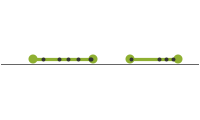
- A spatial observation region has to be bounded and full dimensional, but can be of any dimension. It also needs to be parameter free, i.e. ConstantRegionQ.
-

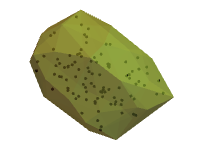
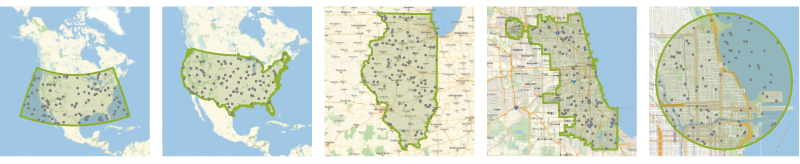
- Geographic regions are typically two-dimensional.
-
Examples
open all close allBasic Examples (2)
Check if a geometric region is a spatial observation region:
SpatialObservationRegionQ[Rectangle[]]SpatialObservationRegionQ[Disk[{0, 0}, a]]SpatialObservationRegionQ[Polyhedron[{{-Sqrt[1 + 2/Sqrt[5]], 0, Root[1 - 20*#1^2 + 80*#1^4 & , 3, 0]},
{Sqrt[1 + 2/Sqrt[5]], 0, Root[1 - 20*#1^2 + 80*#1^4 & , 2, 0]},
{Root[1 - 20*#1^2 + 80*#1^4 & , 1, 0], (-3 - Sqrt[5])/4, Root[1 - 20*#1^2 + 80*#1^4 & , 3, 0]},
{R ...
{{15, 10, 9, 14, 1}, {2, 6, 12, 11, 5}, {5, 11, 7, 3, 19}, {11, 12, 8, 16, 7}, {12, 6, 20, 4, 8},
{6, 2, 13, 18, 20}, {2, 5, 19, 17, 13}, {4, 20, 18, 10, 15}, {18, 13, 17, 9, 10},
{17, 19, 3, 14, 9}, {3, 7, 16, 1, 14}, {16, 8, 4, 15, 1}}]]Check if a geographical region is a spatial observation region:
SpatialObservationRegionQ[GeoDisk[Here, Quantity[1, "km"]]]SpatialObservationRegionQ[GeoBoundsRegion[{{-10, 10}, {20, 30}}]]SpatialObservationRegionQ[Entity["Country", "Poland"]["Polygon"]]Properties & Relations (3)
A spatial observation region is full-dimensional:
reg1 = Polygon[{{0, 0}, {0, 1}, {3, 2}}];
reg2 = Line[{{0, 0}, {0, 1}, {3, 2}}];{SpatialObservationRegionQ[reg1], SpatialObservationRegionQ[reg2]}{RegionDimension[reg1], RegionDimension[reg2]}Compute region embedding dimension:
{RegionEmbeddingDimension[reg1], RegionEmbeddingDimension[reg2]}Both dimensions must be the same for the region to be full-dimensional:
RegionDimension[reg1] == RegionEmbeddingDimension[reg1]RegionDimension[reg2] == RegionEmbeddingDimension[reg2]A spatial observation region is bounded:
reg = Polygon[{{0, 0}, {0, 1}, {1, 2}}];SpatialObservationRegionQ[reg]Check if the region is bounded:
BoundedRegionQ[reg]A spatial observation region is parameter free:
reg1 = Disk[{0, 0}, 1];
Clear[a];
reg2 = Disk[{0, 0}, a];{SpatialObservationRegionQ[reg1], SpatialObservationRegionQ[reg2]}{ConstantRegionQ[reg1], ConstantRegionQ[reg2]}Possible Issues (3)
A network region is not a valid spatial observation region:
reg = Line[{{1, 0}, {2, 1}, {3, 0}, {4, 1}}];Graphics[reg]SpatialObservationRegionQ[reg]This region is not fully dimensional:
RegionDimension[reg] == RegionEmbeddingDimension[reg]A geographical region is bounded if its GeoArea is finite:
reg = Entity["Country", "Poland"]["Polygon"];GeoArea[reg]It is also bounded and constant in the geometrical sense:
BoundedRegionQ[reg]ConstantRegionQ[reg]The region dimension and embedding dimension do not agree:
{RegionDimension[reg], RegionEmbeddingDimension[reg]}But it is a valid spatial observation region:
SpatialObservationRegionQ[reg]For simulation of a point configuration, the region must be parameter free:
reg = Disk[{0, 0}, a];RandomPointConfiguration[PoissonPointProcess[20, 2], reg]
The region is not parameter free:
ConstantRegionQ[reg]Assign a numerical value to the parameter for simulation:
RandomPointConfiguration[PoissonPointProcess[20, 2], reg /. a -> 1]Text
Wolfram Research (2020), SpatialObservationRegionQ, Wolfram Language function, https://reference.wolfram.com/language/ref/SpatialObservationRegionQ.html.
CMS
Wolfram Language. 2020. "SpatialObservationRegionQ." Wolfram Language & System Documentation Center. Wolfram Research. https://reference.wolfram.com/language/ref/SpatialObservationRegionQ.html.
APA
Wolfram Language. (2020). SpatialObservationRegionQ. Wolfram Language & System Documentation Center. Retrieved from https://reference.wolfram.com/language/ref/SpatialObservationRegionQ.html