

EulerCharacteristic
EulerCharacteristic[poly]
gives the Euler characteristic of a poly.
Details
- EulerCharacteristic is also known as Euler number or Euler–Poincaré characteristic.
- EulerCharacteristic is a topological invariant that describes the shape of the polyhedron, regardless of the way it is bent.
- The Euler characteristic
 for a polyhedron is given by
  , where
  is the number of vertices,
  the number of edges and
  the number of faces.
 - A polyhedron with
 voids and
  tunnels satisfies
 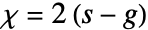 .
. - The Euler characteristic for a mesh region is given by χ=
 (-1)nMeshCellCount[poly,n].
Examples
open all close allBasic Examples (1)
Euler characteristic of a polyhedron:
𝒫 = Polyhedron[{{-Sqrt[1 + 2/Sqrt[5]], 0, Root[1 - 20*#1^2 + 80*#1^4 & , 3, 0]},
  {Sqrt[1 + 2/Sqrt[5]], 0, Root[1 - 20*#1^2 + 80*#1^4 & , 2, 0]},
  {Root[1 - 20*#1^2 + 80*#1^4 & , 1, 0], (-3 - Sqrt[5])/4, Root[1 - 20*#1^2 + 80*#1^4 & , 3, 0]},
  {R ...
 {{15, 10, 9, 14, 1}, {2, 6, 12, 11, 5}, {5, 11, 7, 3, 19}, {11, 12, 8, 16, 7}, {12, 6, 20, 4, 8},
  {6, 2, 13, 18, 20}, {2, 5, 19, 17, 13}, {4, 20, 18, 10, 15}, {18, 13, 17, 9, 10},
{17, 19, 3, 14, 9}, {3, 7, 16, 1, 14}, {16, 8, 4, 15, 1}}];EulerCharacteristic[𝒫]Region[𝒫]Scope (4)
EulerCharacteristic works on polyhedrons:
𝒫 = Polyhedron[{{0, 0, 0}, {1, 0, 0}, {0, 1, 0}, {0, 0, 1}}, {{1, 2, 3}, {1, 2, 4}, {2, 3, 4},
{1, 3, 4}}];EulerCharacteristic[𝒫]Region[𝒫]EulerCharacteristic[Tetrahedron[]]EulerCharacteristic[Hexahedron[]]Polyhedron[{{0, 0, 0}, {0, 3, 0}, {3, 3, 0}, {3, 0, 0}, {0, 0, 3}, {0, 3, 3}, {3, 3, 3}, {3, 0, 3}, {1, 1, 1}, {1, 2, 1}, {2, 2, 1}, {2, 1, 1}, {1, 1, 2}, {1, 2, 2}, {2, 2, 2}, {2, 1, 2}}, {{{2, 3, 4, 1}, {1, 4, 8, 5}, {4, 3, 7, 8}, {3, 2, 6, 7}, {2, 1, 5, 6}, {5, 8, 7, 6}} -> {{{10, 11, 12, 9}, {9, 12, 16, 13}, {12, 11, 15, 16}, {11, 10, 14, 15}, {10, 9, 13, 14}, {13, 16, 15, 14}}}}];EulerCharacteristic[%]Polyhedrons with disconnected components:
Polyhedron[{{0, 0, 0}, {1, 0, 0}, {0, 1, 0}, {0, 0, 1}, {1, 1, 1}, {2, 1, 1}, {1, 2, 1}, {1, 1, 2}}, {{{1, 2, 3}, {1, 2, 4}, {2, 3, 4}, {1, 3, 4}}, {{5, 6, 7}, {5, 6, 8}, {6, 7, 8}, {5, 7, 8}}}]EulerCharacteristic[%]EulerCharacteristic works on mesh regions:
MengerMesh[1, 3]EulerCharacteristic[%]Properties & Relations (3)
Use EulerCharacteristic to compute PolyhedronGenus for a simple polyhedron:
𝒫 = Polyhedron[{{0, 0, 0}, {1, 0, 0}, {0, 1, 0}, {0, 0, 1}}, {{1, 2, 3}, {1, 2, 4}, {2, 3, 4},
{1, 3, 4}}];SimplePolyhedronQ[𝒫]1 - EulerCharacteristic[𝒫] / 2 == PolyhedronGenus[𝒫]Euler characteristic of a convex polyhedron equals 2:
𝒫 = Polyhedron[{{0, 0, 0}, {1, 0, 0}, {0, 1, 0}, {0, 0, 1}}, {{1, 2, 3}, {1, 2, 4}, {2, 3, 4},
{1, 3, 4}}];ConvexPolyhedronQ[𝒫]EulerCharacteristic[𝒫] == 2Euler characteristic of UniformPolyhedron is 2:
UniformPolyhedron[{3, 5}]EulerCharacteristic[%]Text
Wolfram Research (2019), EulerCharacteristic, Wolfram Language function, https://reference.wolfram.com/language/ref/EulerCharacteristic.html.
CMS
Wolfram Language. 2019. "EulerCharacteristic." Wolfram Language & System Documentation Center. Wolfram Research. https://reference.wolfram.com/language/ref/EulerCharacteristic.html.
APA
Wolfram Language. (2019). EulerCharacteristic. Wolfram Language & System Documentation Center. Retrieved from https://reference.wolfram.com/language/ref/EulerCharacteristic.html