

FluidFlowPDEComponent
FluidFlowPDEComponent[vars,pars]
yields a flow PDE term with variables vars and parameters pars.
Details
- FluidFlowPDEComponent models flow of viscous fluids subject to applied forces and constraints.
- FluidFlowPDEComponent returns a sum of differential operators to be used as a part of partial differential equations:
- FluidFlowPDEComponent models fluid flow phenomena with velocities
 ,
,  and
and  in units of [
![TemplateBox[{InterpretationBox[, 1], {"m", , "/", , "s"}, meters per second, {{(, "Meters", )}, /, {(, "Seconds", )}}}, QuantityTF]](Files/FluidFlowPDEComponent.en/5.png "TemplateBox[{InterpretationBox[, 1], {\"m\", , \"/\", , \"s\"}, meters per second, {{(, \"Meters\", )}, /, {(, \"Seconds\", )}}}, QuantityTF]") ] as dependent variables,
] as dependent variables,  as independent variables in units of [
![TemplateBox[{InterpretationBox[, 1], "m", meters, "Meters"}, QuantityTF]](Files/FluidFlowPDEComponent.en/7.png "TemplateBox[{InterpretationBox[, 1], \"m\", meters, \"Meters\"}, QuantityTF]") ] and time variable
] and time variable  in units of [
![TemplateBox[{InterpretationBox[, 1], "s", seconds, "Seconds"}, QuantityTF]](Files/FluidFlowPDEComponent.en/9.png "TemplateBox[{InterpretationBox[, 1], \"s\", seconds, \"Seconds\"}, QuantityTF]") ].
]. - FluidFlowPDEComponent creates PDE components for stationary, time-dependent, parametric analysis.
- FluidFlowPDEComponent creates PDE components in two and three space dimensions.
- Stationary variables vars are vars={{u[x1,…,xn],v[x1,…,xn],…,p[x1,…,xn]},{x1,…,xn}}.
- Time-dependent or eigenmode variables vars are vars={{u[t,x1,…,xn],v[t,x1,…,xn],…,p[x1,…,xn]},t,{x1,…,xn}}.
- The equations for different analysis types that FluidFlowPDEComponent generates depend on the form of vars.
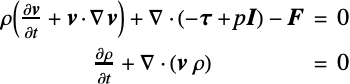
- FluidFlowPDEComponent creates a system of equations with the vector-valued Navier–Stokes equation combined with the continuity equation.
- The time-dependent equilibrium equation of the fluid dynamics PDE FluidFlowPDEComponent with mass density
 [
[![TemplateBox[{InterpretationBox[, 1], {"kg", , "/", , {"m", ^, 3}}, kilograms per meter cubed, {{(, "Kilograms", )}, /, {(, {"Meters", ^, 3}, )}}}, QuantityTF]](Files/FluidFlowPDEComponent.en/12.png "TemplateBox[{InterpretationBox[, 1], {\"kg\", , \"/\", , {\"m\", ^, 3}}, kilograms per meter cubed, {{(, \"Kilograms\", )}, /, {(, {\"Meters\", ^, 3}, )}}}, QuantityTF]") ], fluid velocity
], fluid velocity  [
[![TemplateBox[{InterpretationBox[, 1], {"m", , "/", , "s"}, meters per second, {{(, "Meters", )}, /, {(, "Seconds", )}}}, QuantityTF]](Files/FluidFlowPDEComponent.en/14.png "TemplateBox[{InterpretationBox[, 1], {\"m\", , \"/\", , \"s\"}, meters per second, {{(, \"Meters\", )}, /, {(, \"Seconds\", )}}}, QuantityTF]") ], time
], time  [
[![TemplateBox[{InterpretationBox[, 1], "s", seconds, "Seconds"}, QuantityTF]](Files/FluidFlowPDEComponent.en/16.png "TemplateBox[{InterpretationBox[, 1], \"s\", seconds, \"Seconds\"}, QuantityTF]") ], viscous stress tensor
], viscous stress tensor  [
[![TemplateBox[{InterpretationBox[, 1], "Pa", pascals, "Pascals"}, QuantityTF]](Files/FluidFlowPDEComponent.en/18.png "TemplateBox[{InterpretationBox[, 1], \"Pa\", pascals, \"Pascals\"}, QuantityTF]") ], pressure
], pressure  [
[![TemplateBox[{InterpretationBox[, 1], "Pa", pascals, "Pascals"}, QuantityTF]](Files/FluidFlowPDEComponent.en/20.png "TemplateBox[{InterpretationBox[, 1], \"Pa\", pascals, \"Pascals\"}, QuantityTF]") ], identity matrix
], identity matrix  and body load vectors
  [
[![TemplateBox[{InterpretationBox[, 1], {"N", , "/", , {"m", ^, 3}}, newtons per meter cubed, {{(, "Newtons", )}, /, {(, {"Meters", ^, 3}, )}}}, QuantityTF]](Files/FluidFlowPDEComponent.en/23.png "TemplateBox[{InterpretationBox[, 1], {\"N\", , \"/\", , {\"m\", ^, 3}}, newtons per meter cubed, {{(, \"Newtons\", )}, /, {(, {\"Meters\", ^, 3}, )}}}, QuantityTF]") ] is based on the Navier–Stokes equation and the continuity equation:
] is based on the Navier–Stokes equation and the continuity equation: - In compressible form, the viscous stress tensor
 is given as:
 - Here
 [
[![TemplateBox[{InterpretationBox[, 1], {"s", , "Pa"}, second pascals, {"Pascals", , "Seconds"}}, QuantityTF]](Files/FluidFlowPDEComponent.en/28.png "TemplateBox[{InterpretationBox[, 1], {\"s\", , \"Pa\"}, second pascals, {\"Pascals\", , \"Seconds\"}}, QuantityTF]") ] is the dynamic viscosity, and infinitesimal, small deformation strain rate measure
] is the dynamic viscosity, and infinitesimal, small deformation strain rate measure  [1/
[1/![TemplateBox[{InterpretationBox[, 1], "s", seconds, "Seconds"}, QuantityTF]](Files/FluidFlowPDEComponent.en/30.png "TemplateBox[{InterpretationBox[, 1], \"s\", seconds, \"Seconds\"}, QuantityTF]") ] is given as:
] is given as: - FluidFlowPDEComponent creates a PDE model for compressible or incompressible fluid flow, depending on the nature of the values of the mass density
 .
. - The compressible fluid dynamics model is given as:
- For constant values of the mass density
 , the mass continuity equation simplifies to a volumetric continuity equation
 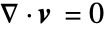 , and with that, the viscous stress tensor simplifies to
  .
. - The incompressible fluid dynamics model is given as:
- The stationary equilibrium equations have
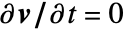 .
. - The units of the Navier–Stokes model terms are a force density in [
![TemplateBox[{InterpretationBox[, 1], {"N", , "/", , {"m", ^, 3}}, newtons per meter cubed, {{(, "Newtons", )}, /, {(, {"Meters", ^, 3}, )}}}, QuantityTF]](Files/FluidFlowPDEComponent.en/39.png "TemplateBox[{InterpretationBox[, 1], {\"N\", , \"/\", , {\"m\", ^, 3}}, newtons per meter cubed, {{(, \"Newtons\", )}, /, {(, {\"Meters\", ^, 3}, )}}}, QuantityTF]") ].
]. - The units of the mass continuity equation model terms are a force density in [
![TemplateBox[{InterpretationBox[, 1], {"kg", , "/(", , {"m", ^, 3}, , "s", , ")"}, kilograms per meter cubed second, {{(, "Kilograms", )}, /, {(, {{"Meters", ^, 3}, , "Seconds"}, )}}}, QuantityTF]](Files/FluidFlowPDEComponent.en/40.png "TemplateBox[{InterpretationBox[, 1], {\"kg\", , \"/(\", , {\"m\", ^, 3}, , \"s\", , \")\"}, kilograms per meter cubed second, {{(, \"Kilograms\", )}, /, {(, {{\"Meters\", ^, 3}, , \"Seconds\"}, )}}}, QuantityTF]") ], and for the volumetric continuity [1/
], and for the volumetric continuity [1/![TemplateBox[{InterpretationBox[, 1], "s", seconds, "Seconds"}, QuantityTF]](Files/FluidFlowPDEComponent.en/41.png "TemplateBox[{InterpretationBox[, 1], \"s\", seconds, \"Seconds\"}, QuantityTF]") ].
]. - Laminar flow is typical for
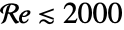 , where
  is the Reynolds number.
 - The Reynolds number
 is defined as
 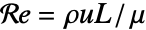 , where
  [
[![TemplateBox[{InterpretationBox[, 1], "m", meters, "Meters"}, QuantityTF]](Files/FluidFlowPDEComponent.en/47.png "TemplateBox[{InterpretationBox[, 1], \"m\", meters, \"Meters\"}, QuantityTF]") ] is a characteristic length and
] is a characteristic length and  the flow velocity.
 - The following parameters pars can be given:
-
parameter default symbol "CoordinateChart" - none "DynamicViscosity" -  , dynamic viscosity [
![TemplateBox[{InterpretationBox[, 1], {"s", , "Pa"}, second pascals, {"Pascals", , "Seconds"}}, QuantityTF]](Files/FluidFlowPDEComponent.en/50.png "TemplateBox[{InterpretationBox[, 1], {\"s\", , \"Pa\"}, second pascals, {\"Pascals\", , \"Seconds\"}}, QuantityTF]") ]
]"FluidLoad" 0  , body force density [
![TemplateBox[{InterpretationBox[, 1], {"N", , "/", , {"m", ^, 3}}, newtons per meter cubed, {{(, "Newtons", )}, /, {(, {"Meters", ^, 3}, )}}}, QuantityTF]](Files/FluidFlowPDEComponent.en/52.png "TemplateBox[{InterpretationBox[, 1], {\"N\", , \"/\", , {\"m\", ^, 3}}, newtons per meter cubed, {{(, \"Newtons\", )}, /, {(, {\"Meters\", ^, 3}, )}}}, QuantityTF]") ]
]"FluidDynamicsMaterialModel" "Newtonian" none "MassDensity" -  , density in [
![TemplateBox[{InterpretationBox[, 1], {"kg", , "/", , {"m", ^, 3}}, kilograms per meter cubed, {{(, "Kilograms", )}, /, {(, {"Meters", ^, 3}, )}}}, QuantityTF]](Files/FluidFlowPDEComponent.en/54.png "TemplateBox[{InterpretationBox[, 1], {\"kg\", , \"/\", , {\"m\", ^, 3}}, kilograms per meter cubed, {{(, \"Kilograms\", )}, /, {(, {\"Meters\", ^, 3}, )}}}, QuantityTF]") ]
] "Material" - none "ModelForm" "Conservative" none "RegionSymmetry" None - "ReynoldsNumber" - 
- If a "Material" is specified, the material constants are extracted from the material data; otherwise, relevant material parameters need to be specified.
- Instead of material parameters, a Reynolds number
 can be specified:
 - "RegionSymmetry"->"Axisymmetric" uses a truncated cylindrical coordinate system and assumes
 in the
  direction and pressure
  and velocity components
  and
and  independent of
  .
. - The axis of symmetry is the
 axis.
axis. - A "CoordinateChart" uses the same specification as CoordinateChartData.
- "CoordinateChart"->"Cylindrical" with pars
 assumes
 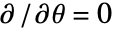 and can be used to model swirling flow. »
 - The default material model is a Newtonian flow model.
- Alternate material models can be specified by setting the "FluidDynamicsMaterialModel" key in parameters pars.
- The following non-Newtonian material models are available:
-
material model name "PowerLaw" "Carreau" "Bingham-Papanastasiou" "Herschel-Bulkley-Papanastasiou" "Casson-Papanastasiou" - The apparent viscosity
 is a function of the shear rate
  .
. - Additional material model-specific parameters for a model with "ModelName" can be specified through "FluidDynamicsMaterialModel"-><"ModelName"-><...>>.
- The "PowerLaw" model, a general-purpose model, implements
 .
. - The following parameters can be given for the "PowerLaw" model:
-
parameter default symbol "PowerLawExponent" 
 , exponent
"MinimalShearRate" 
 , minimal shear rate
"ReferenceShearRate" 
 , reference shear rate
"PowerLawViscosity" 
 , power law viscosity
 - The generalized "Carreau" model, useful for polymer or blood flow, implements
 .
. - The following parameters can be given for the "Carreau" model:
-
parameter default symbol "PowerLawExponent" 
 , exponent
"TransitionExponent" 2  , exponent
"InfiniteShearRateViscosity" 
 , viscosity at inifinite shear rate
"Lambda" 
 , relaxation time [
![TemplateBox[{InterpretationBox[, 1], "s", seconds, "Seconds"}, QuantityTF]](Files/FluidFlowPDEComponent.en/87.png "TemplateBox[{InterpretationBox[, 1], \"s\", seconds, \"Seconds\"}, QuantityTF]") ]
]"ZeroShearRateViscosity" 
 , viscosity at zero shear rate
 - The "Carreau" model can also be used for a Cross model where
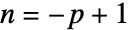 with
with  .
. - The "Bingham-Papanastasiou" model, useful for viscoplastic material, implements
 .
. - The following parameters can be given for the "Bingham-Papanastasiou" model:
-
parameter default symbol "PlasticViscosity" 
 , plastic viscosity
"YieldStress" 
 , yield stress
"ShearRateFactor" 
 , shear rate factor
 - The "Herschel-Bulkley-Papanastasiou" model, a mixture of a "PowerLaw" and "Bingham-Papanastasiou" model, implements
 . The model uses a power law to compute the plastic viscosity
  of the Bingham–Papanastasiou model, and parameters for both models can be set.
 - The "Casson-Papanastasiou" model, useful for viscoplastic material or blood flow, implements
 .
. - The following parameters can be given for the "Casson-Papanastasiou" model:
-
parameter default symbol "PlasticViscosity" 
 , plastic viscosity
"YieldStress" 
 , yield stress
"ShearRateFactor" 
 , shear rate factor
 - A custom apparent viscosity function fun can be specified as "FluidDynamicsMaterialModel"<"Custom"<"ApparentViscosityFunction"fun>>
- A custom apparent viscosity function fun has a function signature fun[vars_,pars_,data__].
- A custom viscous stress tensor function fun can be specified as "FluidDynamicsMaterialModelFunction"fun.
- A custom viscous stress tensor function fun has a function signature fun[vars_,pars_,data__].
- Non-isothermal flow can be modeled through the Boussinesq approximation.
- FluidFlowPDEComponent uses "SIBase" units. The geometry has to be in the same units as the PDE.
- If the FluidFlowPDEComponent depends on parameters
 that are specified in the association pars as …,keypi…,pivi,…, the parameters
  are replaced with
  .
.







Examples
open all close allBasic Examples (4)
FluidFlowPDEComponent[{{u[x, y], v[x, y], p[x, y]}, {x, y}}, Entity["Chemical", "Glycerol"]]//MatrixFormFluidFlowPDEComponent[{{u[x, y], v[x, y], p[x, y]}, {x, y}}, <|"DynamicViscosity" -> μ, "MassDensity" -> ρ|>]//MatrixFormDefine a stationary flow PDE model with a Reynolds number of 100:
FluidFlowPDEComponent[{{u[x, y], v[x, y], p[x, y]}, {x, y}}, <|"ReynoldsNumber" -> 100|>]//MatrixFormSolve for the flow velocity and pressure in a driven cavity with a Reynolds number of 1000:
{uVel, vVel, pressure} = NDSolveValue[{FluidFlowPDEComponent[{{u[x, y], v[x, y], p[x, y]}, {x, y}}, <|"ReynoldsNumber" -> 1000|>] == {0, 0, 0}, DirichletCondition[{u[x, y] == 1, v[x, y] == 0}, y == 1], DirichletCondition[{u[x, y] == 0, v[x, y] == 0}, y < 1], DirichletCondition[p[x, y] == 0, x == 0 && y == 0]}, {u[x, y], v[x, y], p[x, y]}, {x, y}∈Rectangle[{0, 0}, {1, 1}], Method -> {"FiniteElement", "InterpolationOrder" -> {u -> 2, v -> 2, p -> 1}}];Visualize the velocity of the fluid:
StreamPlot[{uVel, vVel}, {x, y}∈Rectangle[{0, 0}, {1, 1}]]Scope (13)
2D (4)
Define a flow PDE model for a specific material:
FluidFlowPDEComponent[{{u[x, y], v[x, y], p[x, y]}, {x, y}}, <|"Material" -> Entity["Chemical", "Glycerol"]|>]//MatrixFormSpecify a flow PDE with a dynamic viscosity of  and a mass density of
  :
:
FluidFlowPDEComponent[{{u[x, y], v[x, y], p[x, y]}, {x, y}}, <|"DynamicViscosity" -> Quantity[0.934, "Pascals"*"Seconds"], "MassDensity" -> Quantity[1.25, "Grams"/"Centimeters"^3]|>]//MatrixFormActivate a flow PDE model for a specific material:
Activate[FluidFlowPDEComponent[{{u[x, y], v[x, y], p[x, y]}, {x, y}}, <|"Material" -> Entity["Chemical", "Glycerol"]|>]]Specify a symbolic stationary fluid dynamics PDE in two dimensions with a dynamic viscosity of  and a mass density of
  :
:
FluidFlowPDEComponent[{{u[x, y], v[x, y], p[x, y]}, {x, y}}, <|"DynamicViscosity" -> μ, "MassDensity" -> ρ|>]2D Axisymmetric (1)


3D (1)


Time Dependent (3)
Define a time-dependent flow PDE model:
FluidFlowPDEComponent[{{u[t, x, y], v[t, x, y], p[t, x, y]}, t, {x, y}}, Entity["Chemical", "Glycerol"]]//MatrixFormSpecify a symbolic time-dependent fluid dynamics PDE in two dimensions with a dynamic viscosity of  and a mass density of
  :
:
FluidFlowPDEComponent[{{u[t, x, y], v[t, x, y], p[t, x, y]}, t, {x, y}}, <|"DynamicViscosity" -> μ, "MassDensity" -> ρ|>]Specify a symbolic time-dependent axisymmetric fluid dynamics PDE with a dynamic viscosity of  and a mass density of
  :
:
FluidFlowPDEComponent[{{u[t, r, z], 0, w[t, r, z], p[t, r, z]}, t, {r, θ, z}}, <|"DynamicViscosity" -> μ, "MassDensity" -> ρ, "RegionSymmetry" -> "Axisymmetric"|>]Compressible Flow (1)
A compressible fluid dynamics PDE is generated if the mass density  is a function of space or time
  :
:
FluidFlowPDEComponent[{{u[x, y], v[x, y], p[x, y]}, {x, y}}, <|"DynamicViscosity" -> μ, "MassDensity" -> ρ[x, y]|>]An incompressible fluid dynamics PDE is generated if the mass density  is a constant:
FluidFlowPDEComponent[{{u[x, y], v[x, y], p[x, y]}, {x, y}}, <|"DynamicViscosity" -> μ, "MassDensity" -> ρ|>]Non-Newtonian Flow (3)
Specify a symbolic PDE for a non-Newtonian power-law model:
FluidFlowPDEComponent[{{u[x, y], v[x, y], p[x, y]}, {x, y}}, <|"MassDensity" -> ρ, "FluidDynamicsMaterialModel" -> <|"PowerLaw" -> <|"Exponent" -> n, "MinimalShearRate" -> Subscript[Overscript[γ, .], min], "ReferenceShearRate" -> Subscript[Overscript[γ, .], ref], "PowerLawViscosity" -> m|>|>|>]//MatrixFormCustom fluid models can be obtained by specifying the apparent viscosity. Define the custom apparent viscosity function:
apparentViscosity[vars_, pars_, data_] := Module[{strainRate, shearRate, viscosity, exponent}, viscosity = pars["FluidDynamicsMaterialModel"]["Custom"]["viscosity"];
	exponent = pars["FluidDynamicsMaterialModel"]["Custom"]["exponent"];
	strainRate = "StrainRate" /. data;
	shearRate = Sqrt[2 * ArrayDot[strainRate, strainRate, 2]];
	viscosity * (shearRate) ^ (exponent - 1)]
Specify a symbolic non-Newtonian fluid dynamics PDE with the custom apparent viscosity:
FluidFlowPDEComponent[{{u[x, y], v[x, y], p[x, y]}, {x, y}}, <|"MassDensity" -> ρ, "FluidDynamicsMaterialModel" -> <|"Custom" -> <|"ApparentViscosityFunction" -> apparentViscosity, "viscosity" -> m, "exponent" -> n|>|>|>]//MatrixFormCustom fluid models can be specified by specifying the viscous stress tensor. Define the custom viscous stress tensor function:
viscousStress[vars_, pars_, data_] := Module[{strainRate, shearRate, viscosity, exponent, apparentViscosity}, viscosity = pars["viscosity"];
	exponent = pars["exponent"];
	strainRate = "StrainRate" /. data;
	shearRate = Sqrt[2 * ArrayDot[strainRate, strainRate, 2]];
	apparentViscosity = viscosity * (shearRate) ^ (exponent - 1);
	2 * apparentViscosity * strainRate]
Specify a symbolic non-Newtonian fluid dynamics PDE with the custom viscous stress tensor:
FluidFlowPDEComponent[{{u[x, y], v[x, y], p[x, y]}, {x, y}}, <|"MassDensity" -> 1, "FluidDynamicsMaterialModelFunction" -> viscousStress, "viscosity" -> m, "exponent" -> n|>]//MatrixFormApplications (8)
Stationary Analysis (1)
Solve for the velocity and pressure in a cavity, where the flow is driven at the top of a box:
{uVel, vVel, pressure} = NDSolveValue[{FluidFlowPDEComponent[{{u[x, y], v[x, y], p[x, y]}, {x, y}}, <|"ReynoldsNumber" -> 1000|>] == {0, 0, 0}, DirichletCondition[{u[x, y] == 1, v[x, y] == 0}, y == 1], DirichletCondition[{u[x, y] == 0, v[x, y] == 0}, y < 1], DirichletCondition[p[x, y] == 0, x == 0 && y == 0]}, {u[x, y], v[x, y], p[x, y]}, {x, y}∈Rectangle[{0, 0}, {1, 1}], Method -> {"FiniteElement", "InterpolationOrder" -> {u -> 2, v -> 2, p -> 1}}];Visualize the velocity of the fluid:
StreamPlot[{uVel, vVel}, {x, y}∈Rectangle[{0, 0}, {1, 1}]]Non-Newtonian Flow (1)
Compute the fluid flow of a non-Newtonian fluid in an opening channel by using the power law fluid flow model.
Ω = RegionUnion[Rectangle[{0, -1 / 2}, {5, 1 / 2}], Rectangle[{5, -3 / 2}, {30, 3 / 2}]];Set up variables, flow parameters and the non-Newtonian power law for parameters for the exponent and power law viscosity:
vars = {{u[x, y], v[x, y], p[x, y]}, {x, y}};
pars = <|"MassDensity" -> 1,
	"FluidDynamicsMaterialModel" -> <|"PowerLaw" -> <|"PowerLawExponent" -> 1 / 2, "PowerLawViscosity" -> 0.008838835|>|>
	|>;
Solve the PDE with an inflow profile given as {1/2,0} and with the outflow pressure set to 0. The walls are set up as no-slip walls:
{uVelocity, vVelocity, pressure} = NDSolveValue[{FluidFlowPDEComponent[vars, pars] == {0, 0, 0}, DirichletCondition[
	{u[x, y] == 1 / 2, v[x, y] == 0}, x == 0], DirichletCondition[{u[x, y] == 0, v[x, y] == 0}, 0 < x < 30],
	DirichletCondition[p[x, y] == 0, x == 30]}, {u, v, p}, {x, y}∈Ω, Method -> {"FiniteElement", "InterpolationOrder" -> {u -> 2, v -> 2, p -> 1}}]
Visualize the velocity in the region:
ContourPlot[Sqrt[uVelocity[x, y] ^ 2 + vVelocity[x, y] ^ 2], {x, y}∈Ω, ...]Plot the flow profile from the middle of the channel to the top scaled to 1:
Plot[uVelocity[28, y * 1.5], {y, 0, 1}]Time-Dependent Analysis (1)
Solve a time-dependent driven cavity problem.
Create and visualize an auxiliary function to ramp up the flow speed on top of the box:
rampFunction[min_, max_, c_, r_] := Function[t, (min * Exp[c * r] + max * Exp[r * t]) / (Exp[c * r] + Exp[r * t])]
ramp = rampFunction[0, 1, 4, 5];
Plot[ramp[t], {t, -1, 10}, PlotRange -> All]pde = FluidFlowPDEComponent[{{u[t, x, y], v[t, x, y], p[t, x, y]}, t, {x, y}}, <|"ReynoldsNumber" -> 1000|>] == {0, 0, 0};Set up the boundary conditions:
bcs = {DirichletCondition[{u[t, x, y] == ramp[t], v[t, x, y] == 0}, y == 1], DirichletCondition[{u[t, x, y] == 0, v[t, x, y] == 0}, y < 1], DirichletCondition[p[t, x, y] == 0, x == 0 && y == 0]};Set up the initial conditions:
ics = {u[0, x, y] == 0, v[0, x, y] == 0, p[0, x, y] == 0};Monitor the solution process and measure the time it takes to solve the PDE:
AbsoluteTiming[Monitor[{uVelocity, vVelocity, pressure} = NDSolveValue[{pde, bcs, ics}, {u, v, p}, {x, y}∈Rectangle[{0, 0}, {1, 1}], {t, 0, 20},
	Method -> {
	"PDEDiscretization" -> {"MethodOfLines",
	"SpatialDiscretization" -> {"FiniteElement", "InterpolationOrder" -> {u -> 2, v -> 2, p -> 1}
	}}}, EvaluationMonitor :> (monitor = Row[{"t = ", CForm[t]}])];, monitor]]
Visualize rasterized frames of the velocity field for various times:
frames = StreamPlot[{uVelocity[#, x, y], vVelocity[#, x, y]}, {x, y}∈Rectangle[{0, 0}, {1, 1}], PlotLabel -> "Time: " <> ToString[#] <> " s", Frame -> False]& /@ Range[1, 20, 1];
frames = Rasterize[#, "Image", ImageResolution -> 120]& /@ frames;
ListAnimate[frames]
Axisymmetric Flow (2)
Compute the fluid flow in a narrowing cylindrical pipe driven by a parabolic inflow. Set up the axisymmetric domain:
domain = RegionUnion[RegionDifference[RegionDifference[RegionUnion[Rectangle[{0, 0}, {2, 7}], Rectangle[{0, 4}, {1, 10}]], Disk[{3 / 2, 7}, 1 / 2]], Disk[{2, 13 / 2}, 1 / 2]], Disk[{3 / 2, 6}, 1 / 2]]pde = FluidFlowPDEComponent[{{u[r, z], 0, w[r, z], p[r, z]}, {r, θ, z}}, <|"MassDensity" -> 1, "DynamicViscosity" -> 1, "RegionSymmetry" -> "Axisymmetric"|>] == {0, 0, 0};Set up the boundary conditions:
bcs = {DirichletCondition[{u[r, z] == 0, w[r, z] == 0.25 * (4 - r ^ 2)}, z == 0],
	DirichletCondition[{u[r, z] == 0, w[r, z] == 0}, r > 0 && z != 0 && z != 10],
	DirichletCondition[u[r, z] == 0, r == 0],
	DirichletCondition[u[r, z] == 0, z == 10],
DirichletCondition[p[r, z] == 0, r == 0 && z == 10]};{rVel, zVel, pressure} = NDSolveValue[{pde,
bcs}, {u[r, z], w[r, z], p[r, z]}, {r, z}∈domain,
Method -> {"FiniteElement", "InterpolationOrder" -> {u -> 2, w -> 2, p -> 1}}];Visualize the velocity of the solution:
VectorPlot[{rVel, zVel}, {r, z}∈domain]Plot the pressure in 3D for part of the pipe:
rmf = RegionMember[domain];
Legended[RegionPlot3D[rmf[{Sqrt[x ^ 2 + y ^ 2], z}] && 0 <= PlanarAngle[{0, 0} -> {{0.02, 0}, {x, y}}] <= (4 π) / 3, {x, -2, 2}, {y, -2, 2}, {z, 0, 10}, ...], BarLegend[...]]
Compute the velocity profile for time-dependent axisymmetric flow driven by a pressure gradient. Set up the domain:
R = 3 / 2;L = 10;
domain = RegionDifference[Rectangle[{0, 0}, {R, L}], Disk[{R, L / 2}, R / 2]]pde = FluidFlowPDEComponent[{{u[t, r, z], 0, w[t, r, z], p[t, r, z]}, t, {r, θ, z}}, <|"DynamicViscosity" -> 1 / 10, "MassDensity" -> 1, "RegionSymmetry" -> "Axisymmetric"|>] == {0, 0, 0};Set up the boundary conditions with a prescribed pressure gradient:
bcs = {DirichletCondition[u[t, r, z] == 0, z == 0],
	DirichletCondition[u[t, r, z] == 0, r == 0],
	DirichletCondition[{u[t, r, z] == 0, w[t, r, z] == 0}, r > 0 && z != 0 && z != L],
	DirichletCondition[p[t, r, z] == Min[t, 1] * 3 / 2 * L, z == 0],
DirichletCondition[{p[t, r, z] == 0, u[t, r, z] == 0}, z == L]};ic = {u[0, r, z] == 0, w[0, r, z] == 0, p[0, r, z] == 0};Solve the equations and measure the time it takes:
tEnd = 5;
AbsoluteTiming[{rVel, zVel, pressure} = NDSolveValue[{pde, bcs, ic}, {u, w, p}, {r, z}∈domain, {t, 0, tEnd}, Method -> {"PDEDiscretization" -> {"MethodOfLines", "SpatialDiscretization" -> {"FiniteElement", "InterpolationOrder" -> {u -> 2, w -> 2, p -> 1}}}}];]
Visualize the rasterized velocity for various times:
frames = VectorPlot[{rVel[#, r, z], zVel[#, r, z]}, {r, z}∈domain, ...]& /@ Range[1, tEnd, 1];
frames = Rasterize[#, "Image", ImageResolution -> 120]& /@ frames;
ListAnimate[frames]
Plot the outflow velocity profile for various times:
Plot[Evaluate[zVel[#, r, L]& /@ Range[1, tEnd, 1]], {r, 0, R}, ...]Swirling Flow (3)
When a wall in an axisymmetric fluid flow rotates, it produces a swirling flow. Model a swirl flow in a tube where the inner wall rotates.
ri = 1 / 2;ro = 3 / 2;h = 3;
Ω = Rectangle[{ri, 0}, {ro, h}]
Create the variables and flow parameters:
vars = {{u[r, z], v[r, z], w[r, z], p[r, z]}, {r, θ, z}};
pars = <|"DynamicViscosity" -> 3, "MassDensity" -> 2, "CoordinateChart" -> "Cylindrical"|>;
Set up the swirl flow operator:
op = Activate[FluidFlowPDEComponent[vars, pars]];At the inner wall, a nonzero angular velocity of  is set up:
stirrer = {DirichletCondition[{u[r, z] == 0, v[r, z] == r * 5π, w[r, z] == 0}, r == ri]};The top and bottom have no velocity in the  direction:
topbottom = DirichletCondition[w[r, z] == 0, z == 0 || z == h];The outer wall has a no-slip boundary condition:
wall = DirichletCondition[{u[r, z] == 0, v[r, z] == 0, w[r, z] == 0}, r == ro];A reference pressure is set up at the lower-left corner of the geometry:
refPressure = DirichletCondition[p[r, z] == 0, r == ri && z == 0];{ufun, vfun, wfun, pfun} = NDSolveValue[{op == {0, 0, 0, 0}, stirrer, topbottom, wall, refPressure}, {u, v, w, p}, {r, z}∈Ω, Method -> {"PDEDiscretization" -> {"FiniteElement", "InterpolationOrder" -> {u -> 2, v -> 2, w -> 2, p -> 1}}}];Construct the analytical solution of the azimuthal velocity  :
:
analyticalSolution = With[{ω = 5π}, {a = -ω * ri ^ 2 / (ro ^ 2 - ri ^ 2), b = ω * ri ^ 2 * ro ^ 2 / (ro ^ 2 - ri ^ 2)},
	Function[r, a * r + b / r]]
Compare the analytical and the numerical solution:
Plot[{analyticalSolution[r] - vfun[r, h / 2]}, {r, ri, ro}, PlotRange -> All]Construct the velocity magnitude:
velMag = FunctionInterpolation[Sqrt[ufun[r, z] ^ 2 + vfun[r, z] ^ 2 + wfun[r, z] ^ 2], {r, z}∈Ω];Visualize the velocity magnitude:
Show[DensityPlot[velMag[r, z], {r, z}∈Ω, ...], ContourPlot[vfun[r, z], {r, z}∈Ω, ...]]Model a three-blade mixer in a beaker. Define the geometry:
Ω = Polygon[{{0.02, 0.05}, {0.02, 0.}, {0., 0.}, {0., 0.015}, {0.001, 0.015}, {0.01, 0.015},
  {0.01, 0.017}, {0.001, 0.017}, {0.001, 0.019}, {0.006666666666666666, 0.019},
  {0.006666666666666666, 0.020999999999999998}, {0.001, 0.020999999999999998}, {0.001, 0.023},
  {0.01, 0.023}, {0.01, 0.025}, {0.001, 0.025}, {0.001, 0.05}}];
RegionPlot[Ω]
Create the fluid flow operator in cylindrical coordinates:
op = Activate[FluidFlowPDEComponent[{{u[r, z], v[r, z], w[r, z], p[r, z]}, {r, θ, z}}, <|"DynamicViscosity" -> 10 ^ -3, "MassDensity" -> 10 ^ 3, "CoordinateChart" -> "Cylindrical"|>]];Set a rotation speed at the shaft:
rotatingShaft = DirichletCondition[{u[r, z] == 0, v[r, z] == r * π, w[r, z] == 0}, 0.015 ≤ z < 0.05 && 0.001 ≤ r < 0.02]wall = DirichletCondition[{u[r, z] == 0, v[r, z] == 0, w[r, z] == 0}, r == 0.02 || z == 0];On the axis of symmetry, the  and
and  velocities are set to 0:
symmetryAxis = DirichletCondition[{u[r, z] == 0, v[r, z] == 0}, r == 0];The top of the beaker is open, and there is no fluid velocity in the  direction:
top = DirichletCondition[w[r, z] == 0, z == 0.05];A reference pressure condition is set at the top-right corner:
refPressure = DirichletCondition[p[r, z] == 0, r == 0.02 && z == 0.05];{ufun, vfun, wfun} = NDSolveValue[{op == {0, 0, 0, 0}, rotatingShaft, wall, symmetryAxis, top, refPressure}, {u, v, w}, {r, z}∈Ω, Method -> {"PDEDiscretization" -> {"FiniteElement"
, "InterpolationOrder" -> {u -> 2, v -> 2, w -> 2, p -> 1}
}}];Compute the velocity magnitude:
velMag = FunctionInterpolation[Sqrt[ufun[r, z] ^ 2 + vfun[r, z] ^ 2 + wfun[r, z] ^ 2], {r, z}∈Ω];Show[HighlightMesh[Polygon[{{0.01, 0.017}, {0.01, 0.015}, {0.001, 0.015}, {0., 0.015}, {0., 0.017}, {0., 0.019},
{0., 0.020999999999999998}, {0., 0.023}, {0., 0.025}, {0., 0.05}, {0.001, 0.05}, {0.001, 0.025},
{0.01, 0.025}, {0.01, 0.023}, {0.001, 0.023}, {0.001, 0.020999999999999998},
{0.006666666666666666, 0.020999999999999998}, {0.006666666666666666, 0.019}, {0.001, 0.019},
{0.001, 0.017}}], {...}],
DensityPlot[velMag[r, z], {r, z}∈Ω, ...], ContourPlot[vfun[r, z], {r, z}∈Ω, ...], Rule[...]]Simulate a Taylor–Couette flow with various rotating speeds of the inner cylinder. Set up a region:
Ω = Rectangle[{1, -1.5}, {1.5, 1.5}];Setup a swirling flow PDE with the rotational speed  as parameter:
parafun = ParametricNDSolveValue[{Activate[FluidFlowPDEComponent[{{u[r, z], v[r, z], w[r, z], p[r, z]}, {r, θ, z}}, <|"DynamicViscosity" -> 1, "MassDensity" -> 1, "CoordinateChart" -> "Cylindrical"|>]] == {0, 0, 0, 0},
	DirichletCondition[{u[r, z] == 0, v[r, z] == r * ω, w[r, z] == 0}, r == 1], DirichletCondition[{u[r, z] == 0, v[r, z] == 0, w[r, z] == 0}, r > 1], DirichletCondition[p[r, z] == 0, r == 1 && z == -1.5]}, {u, v, w, p}, {r, z}∈Ω, ω, Method -> {"PDEDiscretization" -> {"FiniteElement"
	, "InterpolationOrder" -> {u -> 2, v -> 2, w -> 2, p -> 1}}}]
{ufun, vfun, wfun, pfun} = parafun[50];Verify that the numerical solution matches the analytical solution for this rotational speed:
Plot[Evaluate[vfun[r, 0] - (-ω * ri ^ 2 / (ro ^ 2 - ri ^ 2) * r + ω * ro ^ 2 / (ro ^ 2 - ri ^ 2) / r /. {ri -> 1, ro -> 3 / 2, ω -> 50})], {r, 1, 1.5}]Visualize the velocity magnitude:
velMag = FunctionInterpolation[Sqrt[ufun[r, z] ^ 2 + vfun[r, z] ^ 2 + wfun[r, z] ^ 2], {r, z}∈Ω];
Show[DensityPlot[velMag[r, z], {r, z}∈Ω, ...], ContourPlot[vfun[r, z], {r, z}∈Ω, ...], ...]
Compute and visualize the velocity magnitude for a rotational speed of  :
:
{ufun, vfun, wfun, pfun} = parafun[150];
velMag = FunctionInterpolation[Sqrt[ufun[r, z] ^ 2 + vfun[r, z] ^ 2 + wfun[r, z] ^ 2], {r, z}∈Ω];
Show[DensityPlot[velMag[r, z], {r, z}∈Ω, ...], ...]
Note that the flow starts to show toroidal vortices. To increase the rotational velocity to  , an initial seeding with the previous solution is used to solve the now highly nonlinear equations. Compute and visualize the velocity magnitude for a rotational speed of
  :
:
{ufun, vfun, wfun, pfun} = parafun[250, InitialSeeding -> {u[r, z] == ufun[r, z], v[r, z] == vfun[r, z], w[r, z] == wfun[r, z], p[r, z] == pfun[r, z]}];
velMag = FunctionInterpolation[Sqrt[ufun[r, z] ^ 2 + vfun[r, z] ^ 2 + wfun[r, z] ^ 2], {r, z}∈Ω];
Show[
DensityPlot[velMag[r, z], {r, z}∈Ω, ...], ContourPlot[vfun[r, z], {r, z}∈Ω, ...], ...]Text
Wolfram Research (2024), FluidFlowPDEComponent, Wolfram Language function, https://reference.wolfram.com/language/ref/FluidFlowPDEComponent.html (updated 2026).
CMS
Wolfram Language. 2024. "FluidFlowPDEComponent." Wolfram Language & System Documentation Center. Wolfram Research. Last Modified 2026. https://reference.wolfram.com/language/ref/FluidFlowPDEComponent.html.
APA
Wolfram Language. (2024). FluidFlowPDEComponent. Wolfram Language & System Documentation Center. Retrieved from https://reference.wolfram.com/language/ref/FluidFlowPDEComponent.html