

HeunT
HeunT[q,α,γ,δ,ϵ,z]
gives the tri-confluent Heun function.
Details
- HeunT belongs to the Heun class of functions and occurs in quantum mechanics and applications.
- Mathematical function, suitable for both symbolic and numerical manipulation.
- HeunT[q,α,γ,δ,ϵ,z] satisfies the tri-confluent Heun differential equation
 .
. - The HeunT function is the power-series solution
 of the tri-confluent Heun equation that satisfies the conditions
 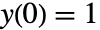 and
and 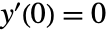 .
. - For certain special arguments, HeunT automatically evaluates to exact values.
- HeunT can be evaluated for arbitrary complex parameters.
- HeunT can be evaluated to arbitrary numerical precision.
- HeunT automatically threads over lists.
Examples
open all close allBasic Examples (3)
Scope (24)
Numerical Evaluation (8)
N[HeunT[9 / 10, -14 / 10, 12 / 100, 3 / 100, -2 / 10, 1 / 10], 50]The precision of the output tracks the precision of the input:
HeunT[9 / 10, -14 / 10, 12 / 100, 3 / 100, -2 / 10, 0.10000000000000000001]HeunT can take one or more complex number parameters:
HeunT[1.2 + I, -1.4, 0.12, 0.03, -0.2, 0.1]HeunT[1.2 + I, -1.4 + 0.I, 0.12 - I, 0.03 + 0.123I, -0.2 - 0.2I, 0.1]HeunT can take complex number arguments:
HeunT[1.2, -1.4, 0.12, 0.03, -0.2, 0.1 + I]Finally, HeunT can take all complex number input:
HeunT[1.2 + I, -1.4 + 0.I, 0.12 - I, 0.03 + 0.123I, -0.2 - 0.2I, 0.1 + I]Evaluate HeunT efficiently at high precision:
HeunT[1 / 2, -1 / 3, 1 / 4, 1 / 5, -1 / 6, 1 / 7`100]//TimingHeunT[1 / 2, -1 / 3, 1 / 4, 1 / 5, -1 / 6, 1 / 7 + I / 2`100]//TimingHeunT[1.2, -1.4, 0.12, 0.03, -0.2, {0.15, 0.1 + I, I, 4}]HeunT[-0.2, {1.3, -0.4}, 0.12, -0.14, 4.32, -1.4]HeunT[1.2, -1.4, 0.12, 0.03, -0.2, (| | |
| :- | :---- |
| π | u |
| v | (π/2) |) ]Compute the elementwise values of an array:
HeunT[.1, .1 + I, 0.12, 1, -0.32, {{.01, -1}, {.3, .2}}]Or compute the matrix HeunT function using MatrixFunction:
MatrixFunction[HeunT[.1, .1 + I, 0.12, 1, -0.32, #]&, {{.01, -1}, {.3, .2}}]Specific Values (2)
Visualization (5)
Plot the HeunT function:
Plot[HeunT[4, -0.6, 0.7 , 1.18, -1.3 , z], {z, -1, 1}]Plot the absolute value of the HeunT function for complex parameters:
Plot[Abs[HeunT[4 + I, -0.6 - 0.3I, -0.7 , -0.18, 0.3 , z]], {z, -2, 1}]Plot HeunT as a function of its second parameter  :
:
Plot[HeunT[4, α, -0.7, -0.18, 0.3 , z] /. α -> {-2, Sqrt[20], 1 / 10}//Evaluate, {z, -1, 1}]Plot HeunT as a function of  and
and  :
:
{α, γ, ϵ, δ} = {0.2 + I, -0.6 + 0.9 I, -0.7 I, 0.3 + 0.6 I};Plot3D[Abs[HeunT[q, α, γ, δ, ϵ, z]], {q, -20, 2}, {z, 1 / 10, 9 / 10}, ColorFunction -> Function[{q, z, HT}, Hue[HT]], PlotRange -> All]Plot the family of HeunT functions for different accessory parameter  :
:
{α, γ, δ, ϵ} = {0.8 + 0.7 I, 0.92 + 0.33I, 0.21 + 0.72 I, -0.76 - 0.81I};Plot[Evaluate[Table[Abs[HeunT[q, α, γ, δ, ϵ, z]], {q, -18, 3, 3}]], {z, -4, 7 / 2}, PlotStyle -> Table[{Hue[i / 10], Thickness[0.002]}, {i, 20}], PlotRange -> {0, 4}, Frame -> True, Axes -> False]Differentiation (2)
First  -derivative of HeunT is HeunTPrime:
D[HeunT[q, α, γ, δ, ϵ, z], z]Higher derivatives of HeunT are calculated using HeunTPrime:
D[HeunT[q, α, γ, δ, ϵ, z], {z, 2}]//SimplifyIntegration (3)
Indefinite integrals of HeunT are not expressed in elementary or other special functions:
Integrate[HeunT[q, α, γ, δ, ϵ, z], z]Definite numerical integral of HeunT:
NIntegrate[HeunT[12 / 10, -14 / 10, 12 / 100, 3 / 100, -2 / 10, z], {z, 0, 1 / 3}]More integrals with HeunT:
NIntegrate[z ^ 2 HeunT[12 / 10, -14 / 10, 12 / 100, 3 / 100, -2 / 10, z], {z, -1, 1 / 3}]NIntegrate[Sin[Sqrt[z]] ^ 2 HeunT[12 / 10, -14 / 10, 12 / 100, 3 / 100, -2 / 10, z], {z, -1, 1 / 3}]Series Expansions (4)
Taylor expansion for HeunT at origin:
Series[HeunT[q, α, γ, δ, ϵ, z], {z, 0, 3}]Coefficient of the third term in the series expansion of HeunT at  :
:
SeriesCoefficient[HeunT[q, α, γ, δ, ϵ, z], {z, 0, 3}]Plot the first three approximations for HeunT around  :
:
{q, α, γ, δ, ϵ} = {-8, -9 / 10, 1 / 10, 4 / 7, 3 / 2};terms = Normal@Table[Series[HeunT[q, α, γ, δ, ϵ, z], {z, 0, m}], {m, 1, 4}];Plot[{HeunT[q, α, γ, δ, ϵ, z], terms}, {z, -3, 3}, PlotRange -> {-5, 5}, PlotLegends -> {"HeunT[q, α, γ, δ, ϵ, z]", "1st approximation", "2nd approximation", "3rd approximation", "4th approximation"}]Series expansion for HeunT at any ordinary complex point:
Series[HeunT[q, α, γ, δ, ϵ, z], {z, 1 / 2, 1}]//FullSimplifyApplications (5)
Solve the tri-confluent Heun differential equation using DSolve:
sol = DSolve[ y''[z] + (γ + δ z + ϵ z^2)y'[z] + (α z - q)y[z] == 0, y[z], z]{q, α, γ, δ, ϵ} = {4, -10, 1 / 3, 0, -1 / 3};Plot[y[z] /. sol /. {{C[1] -> 1, C[2] -> 0}, {C[1] -> 0, C[2] -> 1}, {C[1] -> 1 / 3, C[2] -> 1 / 3}}//Evaluate, {z, -4, 1}]Solve the initial value problem for the tri-confluent Heun differential equation:
sol = DSolveValue[{y''[z] + (γ + δ z + ϵ z^2)y'[z] + (α z - q)y[z] == 0, y[0] == 1, y'[0] == 0}, y[z], z]Plot the solution for different values of the accessory parameter q:
{α, γ, δ, ϵ} = {-10, 1 / 3, 4 / 3, -1 / 3};Plot[Abs[sol] /. q -> {1, 2, 3, 4}//Evaluate, {z, -5 / 2, 1}]Directly solve the tri-confluent Heun differential equation:
y[z_] := HeunT[q, α, γ, δ, ϵ, z]y''[z] + (γ + δ z + ϵ z^2)y'[z] + (α z - q)y[z] == 0//SimplifyThe quartic potential for the 1D Schrödinger equation:
V[z_] := λ^2(Underoverscript[∏, i = 1, 4](z - Subscript[z, i]))Solve this general potential in terms of HeunT functions:
{Subscript[z, 1], Subscript[z, 2], Subscript[z, 3], Subscript[z, 4]} = {1, 2, 3, 4};DSolve[u''[z] - V[z]u[z] == 0, u[z], z]When 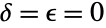 , HeunT can be expressed in terms of Airy functions:
y[z_] = FunctionExpand[HeunT[0, -1, 0, 0, 0, z]]Verify that the result is a solution of the Airy equation:
y''[z] - z y[z] == 0//SimplifyProperties & Relations (4)
HeunT is analytic at the origin:
Series[HeunT[q, α, γ, δ, ϵ, z], {z, 0, 2}]HeunT can be calculated at any finite complex  :
:
HeunT[4 + I, -1 / 2, 1 / 4, -7 / 5, 2, z] /. z -> RandomComplex[{-2 - I, 2 + I}, 5]The derivative of HeunT is HeunTPrime:
D[HeunT[q, α, γ, δ, ϵ, z], z]Use FunctionExpand to expand HeunT into simpler functions:
FunctionExpand[HeunT[q, 0, 1, 1, 0, z]]Possible Issues (1)
HeunT calculations might take time for big arguments:
AbsoluteTiming[HeunT[0.03 + I, 1.3, 1, 0.12, 4.32, 20]]Neat Examples (1)
The classical anharmonic oscillator equation is solved in terms of HeunT:
sol = DSolve[u''[z] + (Subscript[λ, 1] + Subscript[λ, 2]z^2 + Subscript[λ, 4] z^4)u[z] == 0, u[z], z]Simulate the anharmonic oscillator dynamics:
{Subscript[λ, 1], Subscript[λ, 2], Subscript[λ, 4]} = {1, 1 / 2, 1 / 4};Plot[{u[z] /. sol /. {C[1] -> 1, C[2] -> 1}}, {z, 0, 9 / 2}]
 An Elementary Introduction to the Wolfram Language
Text
Wolfram Research (2020), HeunT, Wolfram Language function, https://reference.wolfram.com/language/ref/HeunT.html.
CMS
Wolfram Language. 2020. "HeunT." Wolfram Language & System Documentation Center. Wolfram Research. https://reference.wolfram.com/language/ref/HeunT.html.
APA
Wolfram Language. (2020). HeunT. Wolfram Language & System Documentation Center. Retrieved from https://reference.wolfram.com/language/ref/HeunT.html