HypergeometricPFQRegularized[{a1,…,ap},{b1,…,bq},z]
is the regularized generalized hypergeometric function  .
.




HypergeometricPFQRegularized
HypergeometricPFQRegularized[{a1,…,ap},{b1,…,bq},z]
is the regularized generalized hypergeometric function  .
.
Details
- Mathematical function, suitable for both symbolic and numerical manipulation.
- HypergeometricPFQRegularized is finite for all finite values of its arguments so long as
 .
. - For certain special arguments, HypergeometricPFQRegularized automatically evaluates to exact values.
- HypergeometricPFQRegularized can be evaluated to arbitrary numerical precision.
- HypergeometricPFQRegularized can be used with Interval and CenteredInterval objects. »
Examples
open all close allBasic Examples (6)
HypergeometricPFQRegularized[{1 / 3, 1 / 3, 1 / 3}, {-2, -3}, 0.5]HypergeometricPFQRegularized[{1, 2, -1 / 2}, {-2, -2}, x]Plot over a subset of the reals:
Plot[HypergeometricPFQRegularized[{(1/2)}, {(1/3), (3/5)}, x], {x, -1, 3}]Plot over a subset of the complexes:
ComplexPlot3D[HypergeometricPFQRegularized[{(1/2)}, {(1/3), (3/5)}, z], {z, -1 - I, 1 + I}, PlotLegends -> Automatic]Series expansion at the origin:
Series[HypergeometricPFQRegularized[{a, b}, {c, d}, x], {x, 0, 2}]Series expansion at Infinity:
Series[HypergeometricPFQRegularized[{1 / 2}, {1 / 3}, x], {x, ∞, 5}]//Normal//FullSimplifyScope (33)
Numerical Evaluation (6)
HypergeometricPFQRegularized[{1, 1 / 3, 5}, {-2, -3}, .5]HypergeometricPFQRegularized[{1., 13}, {0, -3}, 7]N[HypergeometricPFQRegularized[{1, 1 / 3, 5}, {-2, -3}, 1 / 3], 50]The precision of the output tracks the precision of the input:
HypergeometricPFQRegularized[{1, 1 / 3, 5}, {1, -3}, 3.0000000000000000000]HypergeometricPFQRegularized[{1. - I, 13}, {I, -3}, 7 + I]Evaluate efficiently at high precision:
HypergeometricPFQRegularized[{1, 2}, {0, -3}, .7`50]//TimingHypergeometricPFQRegularized[{1, 2}, {0, -3}, 17`100000];//TimingHypergeometricPFQRegularized can be used with Interval and CenteredInterval objects:
HypergeometricPFQRegularized[{1 / 2, 2 / 3, 3 / 4}, {4 / 5, 5 / 6}, Interval[{0.11, 0.12}]]HypergeometricPFQRegularized[{1 / 2, 2 / 3, 3 / 4}, {4 / 5, 5 / 6}, CenteredInterval[1 / 2, 1 / 100]]Compute the elementwise values of an array:
HypergeometricPFQRegularized[{1 / 2, 2 / 3, 3 / 4}, {4 / 5, 5 / 6}, {{1 / 2, -1}, {0, 1 / 2}}]Or compute the matrix HypergeometricPFQRegularized function using MatrixFunction:
MatrixFunction[HypergeometricPFQRegularized[{1 / 2, 2 / 3, 3 / 4}, {4 / 5, 5 / 6}, #]&, {{1 / 2, -1}, {0, 1 / 2}}]//FullSimplifySpecific Values (4)
For simple parameters, HypergeometricPFQRegularized evaluates to simpler functions:
HypergeometricPFQRegularized[{1, 1, 3}, {2, 2}, x]HypergeometricPFQRegularized[{-3}, {c}, 2]HypergeometricPFQRegularized[{-3}, {1}, x]HypergeometricPFQRegularized[{2, 1, 2}, {2, 3}, 0]Find a value of  for which HypergeometricPFQRegularized[{2,1},{2,3},x]1.5:
xval = x /. FindRoot[HypergeometricPFQRegularized[{2, 1}, {2, 3}, x] == 1.5, {x, 2}]Plot[HypergeometricPFQRegularized[{2, 1}, {2, 3}, x], {x, -5, 4}, Epilog -> Style[Point[{xval, HypergeometricPFQRegularized[{2, 1}, {2, 3}, xval]}], PointSize[Large], Red]]Visualization (2)
Plot the HypergeometricPFQRegularized function for various parameters:
Plot[{HypergeometricPFQRegularized[{(1/2)}, {(1/3), (3/5)}, x], HypergeometricPFQRegularized[{(1/2)}, {(2/3), (3/5)}, x], HypergeometricPFQRegularized[{(1/2)}, {1, (3/5)}, x]}, {x, -1, 3}]
ComplexContourPlot[Re[HypergeometricPFQRegularized[{1 / 2}, {1 / 2, 1 / 3}, z]], {z, -4 - 4 I, 4 + 4 I}, Contours -> 20]
ComplexContourPlot[Im[HypergeometricPFQRegularized[{1 / 2}, {1 / 2, 1 / 3}, z]], {z, -4 - 4 I, 4 + 4 I}, Contours -> 20]Function Properties (10)
HypergeometricPFQRegularized is defined for all real and complex values:
FunctionDomain[HypergeometricPFQRegularized[{a1, a2}, {b1, b2, b3}, x], x]FunctionDomain[HypergeometricPFQRegularized[{a1, a2}, {b1, b2, b3}, z], z, Complexes]HypergeometricPFQRegularized threads elementwise over lists in its third argument:
HypergeometricPFQRegularized[{1, 2, 3, 4}, {5, 6, 7}, {0.1, 0.3, 0.5}]HypergeometricPFQRegularized is an analytic function of z for specific values:
FunctionAnalytic[HypergeometricPFQRegularized[{1, 1}, {3, 3, 3}, z], z]FunctionAnalytic[HypergeometricPFQRegularized[{1, 1, 2}, {3, 3}, z], z]HypergeometricPFQRegularized is neither non-decreasing nor non-increasing for specific values:
FunctionMonotonicity[HypergeometricPFQRegularized[{1, 1, 2}, {3, 3}, z], z]FunctionMonotonicity[HypergeometricPFQRegularized[{1, 1}, {3, 3, 3}, z], z]HypergeometricPFQRegularized[{1,1,1},{3,3,3},z] is injective:
FunctionInjective[HypergeometricPFQRegularized[{1, 1, 1}, {3, 3, 3}, z], z]Plot[{HypergeometricPFQRegularized[{1, 1, 1}, {3, 3, 3}, z], 2}, {z, -20, 20}]HypergeometricPFQRegularized[{1,1,1},{3,3,3},z] is not surjective:
FunctionSurjective[HypergeometricPFQRegularized[{1, 1, 1}, {3, 3, 3}, z], z]Plot[{HypergeometricPFQRegularized[{1, 1, 1}, {3, 3, 3}, z], -2}, {z, -20, 20}]HypergeometricPFQRegularized is neither non-negative nor non-positive:
FunctionSign[HypergeometricPFQRegularized[{1, 1, 1}, {3, 3, 3}, z], z]FunctionSign[HypergeometricPFQRegularized[{1, 1, 2}, {3, 3}, z], z]HypergeometricPFQRegularized[{1,1,2},{3,3},z] has both singularity and discontinuity for z≥1 and at zero:
FunctionSingularities[HypergeometricPFQRegularized[{1, 1, 2}, {3, 3}, z], z]FunctionDiscontinuities[HypergeometricPFQRegularized[{1, 1, 2}, {3, 3}, z], z]HypergeometricPFQRegularized is neither convex nor concave:
FunctionConvexity[HypergeometricPFQRegularized[{1, 1, 2}, {3, 3}, z], z]FunctionConvexity[HypergeometricPFQRegularized[{1, 1, 1}, {3, 3, 3}, z], z]TraditionalForm formatting:
HypergeometricPFQRegularized[{Subscript[a, 1], Subscript[a, 2], Subscript[a, 3]}, {Subscript[b, 1], Subscript[b, 2]}, z]//TraditionalFormDifferentiation (3)
First derivative with respect to  :
:
D[HypergeometricPFQRegularized[{a1, a2}, {b1, b2, b3}, z], z]Higher derivatives with respect to  :
:
Table[D[HypergeometricPFQRegularized[{a1, a2}, {b1, b2, b3}, z], {z, k}], {k, 1, 3}]//FullSimplifyPlot the higher derivatives with respect to  when
when 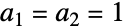 and
and  :
:
Plot[Evaluate[% /. {a1 -> 1, a2 -> 1, b1 -> 3, b2 -> 3, b3 -> 3}], {z, -100, 100}, PlotLegends -> {"First Derivative", "Second Derivative", "Third Derivative"}]Formula for the 
 derivative with respect to z when a1=1,a2=2 and b1=b2=b3=3:
D[HypergeometricPFQRegularized[{1, 2}, {3, 3, 3}, z], {z, k}]// FullSimplifyIntegration (3)
Compute the indefinite integral using Integrate:
Integrate[HypergeometricPFQRegularized[{a1, a2}, {b1, b2, b3}, z], z]FullSimplify[D[%, z]]Integrate[HypergeometricPFQRegularized[{a1, a2}, {b1, b2, b3}, z], {z, 0, 5}]Integrate[z HypergeometricPFQRegularized[{1 / 2, 1 / 2}, {3, 3, 3}, z^2], z]//FullSimplifyIntegrate[ z^2 HypergeometricPFQRegularized[{1 / 3, 1 / 3}, {2, 2}, z], {z, 0, 3}]//FullSimplifySeries Expansions (5)
Find the Taylor expansion using Series:
Series[HypergeometricPFQRegularized[{a1, a2}, {b1, b2}, x], {x, 0, 2}]//Normal//FullSimplifyPlots of the first three approximations around  :
:
terms = Normal@Table[Series[HypergeometricPFQRegularized[{1 / 2, 1 / 2}, {3, 2}, x], {x, 0, m}], {m, 1, 5, 2}]//N;
Plot[{HypergeometricPFQRegularized[{1 / 2, 1 / 2}, {3, 2}, x], terms}, {x, 0, 10}]
General term in the series expansion using SeriesCoefficient:
SeriesCoefficient[HypergeometricPFQRegularized[{a1, a2}, {b1, b2}, x], {x, 1, m}]Find the series expansion at Infinity:
Series[HypergeometricPFQRegularized[{a1, a2}, {b1, b2}, x], {x, Infinity, 1}]//Normal//FullSimplifyFind the series expansion for an arbitrary symbolic direction  :
:
Series[HypergeometricPFQRegularized[{1, 2}, {3, 4}, x], {x, DirectedInfinity[z], 1}, Assumptions -> x > 0]//Normal// FullSimplifyTaylor expansion at a generic point:
Series[HypergeometricPFQRegularized[{a1, a2}, {b1, b2}, x], {x, x0, 2}]// Normal//FullSimplifyApplications (1)

Properties & Relations (2)
Use FunctionExpand to express the input in terms of simpler functions:
FunctionExpand[ HypergeometricPFQRegularized[{1 / 3, 1}, {-1 / 3, -1}, z]]Integrate may return results involving HypergeometricPFQRegularized:
Integrate[ x BesselJ[n, x], x]Related Links

 MathWorld
 The Wolfram Functions Site
Text
Wolfram Research (1996), HypergeometricPFQRegularized, Wolfram Language function, https://reference.wolfram.com/language/ref/HypergeometricPFQRegularized.html (updated 2022).
CMS
Wolfram Language. 1996. "HypergeometricPFQRegularized." Wolfram Language & System Documentation Center. Wolfram Research. Last Modified 2022. https://reference.wolfram.com/language/ref/HypergeometricPFQRegularized.html.
APA
Wolfram Language. (1996). HypergeometricPFQRegularized. Wolfram Language & System Documentation Center. Retrieved from https://reference.wolfram.com/language/ref/HypergeometricPFQRegularized.html