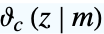


NevilleThetaC
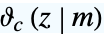
NevilleThetaC[z,m]
gives the Neville theta function 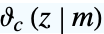 .
.
Details
- Mathematical function, suitable for both symbolic and numerical manipulation.
-

- NevilleThetaC[z,m] is a meromorphic function of
 and has a complicated branch cut structure in the complex
  plane.
 - For certain special arguments, NevilleThetaC automatically evaluates to exact values.
- NevilleThetaC can be evaluated to arbitrary numerical precision.
- NevilleThetaC automatically threads over lists.
Examples
open all close allBasic Examples (4)
NevilleThetaC[2., 0.3]Plot over a subset of the reals::
Plot[NevilleThetaC[x, 1 / 3], {x, -10, 10}]Plot over a subset of the complexes:
ComplexPlot3D[NevilleThetaC[z, 1 / 3], {z, -2 - 2I, 2 + 2I}, PlotLegends -> Automatic]Series expansion at the origin:
Series[NevilleThetaC[z, 0], {z, 0, 12}]Scope (29)
Numerical Evaluation (6)
NevilleThetaC[-45., -.3]NevilleThetaC[E, .7]N[NevilleThetaC[1 / 6, 1 / 3], 50]N[NevilleThetaC[5 / 6, 7 / 11], 50]The precision of the output tracks the precision of the input:
NevilleThetaC[1.21111111111000001, 5]N[NevilleThetaC[2 + I, 5 - I]]Evaluate efficiently at high precision:
NevilleThetaC[2, 1 / 3`100]//TimingNevilleThetaC[2, 13`1000];//TimingCompute average-case statistical intervals using Around:
NevilleThetaC[Around[2, 0.01], 1 / 2]Compute the elementwise values of an array:
NevilleThetaC[π / 3, {{0, 1}, {1, 0}}]Or compute the matrix NevilleThetaC function using MatrixFunction:
MatrixFunction[NevilleThetaC[π / 3, #]&, {{0, 1}, {1, 0}}]//NSpecific Values (4)
Values at corners of the fundamental cell:
Table[NevilleThetaC[u1 EllipticK[m] + u2 I EllipticK[1 - m], m], {u1, {0, 1}}, {u2, {0, 1}}]NevilleThetaC for special values of elliptic parameter:
NevilleThetaC[x, 0]NevilleThetaC[x, 1]Find the first positive maximum of NevilleThetaC[x,1/4]:
xmax = x /. FindRoot[D[NevilleThetaC[x, 1 / 4 ], x] == 0, {x, 7}]Plot[NevilleThetaC[x, 1 / 4 ], {x, -10, 10}, Epilog -> Style[Point[{xmax, NevilleThetaC[xmax, 1 / 4 ]}], PointSize[Large], Red]]Different NevilleThetaC types give different symbolic forms:
Table[NevilleThetaC[x, m], {m, {0, 1, 1 / 2}}]//FunctionExpandVisualization (3)
Plot the NevilleThetaC functions for various values of the parameter:
Plot[{NevilleThetaC[x, -1], NevilleThetaC[x, 0], NevilleThetaC[x, 1 / 3]}, {x, -5, 5}]Plot NevilleThetaC as a function of its parameter  :
:
Plot[{NevilleThetaC[1, m], NevilleThetaC[2, m], NevilleThetaC[3, m]}, {m, -10, 3}]![TemplateBox[{z, {1, /, 2}}, NevilleThetaC]](Files/NevilleThetaC.en/6.png "TemplateBox[{z, {1, /, 2}}, NevilleThetaC]")
ComplexContourPlot[Re[NevilleThetaC[z, 1 / 2]], {z, -4 - 4I, 4 + 4I}, IconizedObject[«PlotOpions»]]![TemplateBox[{z, {1, /, 2}}, NevilleThetaC]](Files/NevilleThetaC.en/7.png "TemplateBox[{z, {1, /, 2}}, NevilleThetaC]")
ComplexContourPlot[Im[NevilleThetaC[z, 1 / 2]], {z, -4 - 4I, 4 + 4I}, IconizedObject[«PlotOptions»]]Function Properties (12)
The real domain of NevilleThetaC:
FunctionDomain[NevilleThetaC[x, 0], x]The complex domain of NevilleThetaC:
FunctionDomain[NevilleThetaC[z, 0], z, Complexes]Approximate function range of ![TemplateBox[{x, 0}, NevilleThetaC]](Files/NevilleThetaC.en/8.png "TemplateBox[{x, 0}, NevilleThetaC]") :
:
FunctionRange[NevilleThetaC[x, 0], x, y]//QuietApproximate function range of ![TemplateBox[{x, 1}, NevilleThetaC]](Files/NevilleThetaC.en/9.png "TemplateBox[{x, 1}, NevilleThetaC]") :
:
FunctionRange[NevilleThetaC[x, 1], x, y]//QuietNevilleThetaC is an even function:
NevilleThetaC[-x, 2] == NevilleThetaC[x, 2]NevilleThetaC threads elementwise over lists:
NevilleThetaC[z, {1, 2, 3, 4}]NevilleThetaC[{1 / 2, 1 / 3, 1 / 4, 1 / 5}, 0.5]![TemplateBox[{x, m}, NevilleThetaC]](Files/NevilleThetaC.en/10.png "TemplateBox[{x, m}, NevilleThetaC]") is an analytic function of
is an analytic function of  for
for  :
:
FunctionAnalytic[NevilleThetaC[x, m], x]![TemplateBox[{x, {1, /, 3}}, NevilleThetaC]](Files/NevilleThetaC.en/13.png "TemplateBox[{x, {1, /, 3}}, NevilleThetaC]") is neither non-decreasing nor non-increasing:
is neither non-decreasing nor non-increasing:
FunctionMonotonicity[Subscript[ϑ, c](x❘(1/3)), x]![TemplateBox[{x, {1, /, 3}}, NevilleThetaC]](Files/NevilleThetaC.en/14.png "TemplateBox[{x, {1, /, 3}}, NevilleThetaC]")
FunctionInjective[Subscript[ϑ, c](x❘1 / 3), x]Plot[{NevilleThetaC[x, 1 / 3], .5}, {x, -5, 5}]![TemplateBox[{x, {1, /, 3}}, NevilleThetaC]](Files/NevilleThetaC.en/15.png "TemplateBox[{x, {1, /, 3}}, NevilleThetaC]")
FunctionSurjective[Subscript[ϑ, c](x❘1 / 3), x]Plot[{Subscript[ϑ, c](x❘1 / 3), 3}, {x, -10, 10}]![TemplateBox[{x, m}, NevilleThetaC]](Files/NevilleThetaC.en/16.png "TemplateBox[{x, m}, NevilleThetaC]") is neither non-negative nor non-positive, except for
is neither non-negative nor non-positive, except for  :
:
Table[FunctionSign[Subscript[ϑ, c](x❘m), x], {m, {1, 2, 3, 4, (1/2), (1/3), (1/4)}}]![TemplateBox[{x, m}, NevilleThetaC]](Files/NevilleThetaC.en/18.png "TemplateBox[{x, m}, NevilleThetaC]") has no singularities or discontinuities except for
has no singularities or discontinuities except for 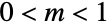 :
:
FunctionSingularities[Subscript[ϑ, c](x❘1 / m), x]FunctionDiscontinuities[Subscript[ϑ, c](x❘1 / m), x]![TemplateBox[{x, m}, NevilleThetaC]](Files/NevilleThetaC.en/20.png "TemplateBox[{x, m}, NevilleThetaC]") is affine only for
is affine only for  and otherwise it is neither convex nor concave:
Table[FunctionConvexity[Subscript[ϑ, c](x❘m), x], {m, 5}]Format NevilleThetaC in TraditionalForm:
NevilleThetaC[z, m] // TraditionalFormDifferentiation (2)
D[NevilleThetaC[u, m], u]D[NevilleThetaC[u, m], m]Table[D[NevilleThetaC[u, 1 / 3], {u, k}], {k, 1, 3}]//Simplify//TraditionalFormPlot the higher-order derivatives:
Plot[%, {u, -10, 10}, PlotLegends -> {"First Derivative", "Second Derivative", "Third Derivative"}]Series Expansions (2)
Find the Taylor expansion using Series:
Series[NevilleThetaC[x, m], {x, 1, 2}]//NormalPlots of the first three approximations around  :
:
terms = Normal@Table[Series[NevilleThetaN[x, 1 / 3], {x, 0, m}], {m, 1, 5, 2}]//N;Plot[{NevilleThetaN[x, 1 / 3], terms}, {x, -5, 5}, MaxRecursion -> 1]The Taylor expansion for small elliptic parameter m:
Series[NevilleThetaC[u, m], {m, 0, 2}]
Series[NevilleThetaC[u, m], {m, 1, 1}]Generalizations & Extensions (1)
NevilleThetaC can be applied to a power series:
NevilleThetaC[z - (z^2/2) + (z^3/9) + O[z]^4, (1/2)]Applications (4)

Plot3D[NevilleThetaC[z, m], {z, -3 / 2Pi, 3 / 2Pi}, {m, -1, 1}]Current flow in a rectangular conducting sheet with voltage applied at a pair of opposite corners:
flow[m_] = (NevilleThetaD[x, m] NevilleThetaD[y, 1 - m] NevilleThetaS[x, m] NevilleThetaS[y, 1 - m]) / (NevilleThetaC[x, m] NevilleThetaC[y, 1 - m] NevilleThetaN[x, m] NevilleThetaN[y, 1 - m]);With[{m = 0.4}, ContourPlot[flow[m], {x, 0, EllipticK[m]}, {y, 0, EllipticK[1 - m]}, ContourShading -> False, MaxRecursion -> 1, Contours -> {0.02, 0.13, 0.3, 0.54, 0.9, 1.46, 2.53, 5.17, 28.4}]]Parametrize a lemniscate by arc length:
lemniscate[s_] := {NevilleThetaC[Sqrt[2] s, (1/2)] NevilleThetaD[Sqrt[2] s, (1/2)], NevilleThetaC[Sqrt[2] s, (1/2)] NevilleThetaS[Sqrt[2] s, (1/2)] / Sqrt[2] } / NevilleThetaN[Sqrt[2] s, (1/2)]^2Show the classical and arc length parametrizations:
Row[{ParametricPlot[{(Cos[θ]/1 + Sin[θ]^2), (Sin[θ] Cos[θ]/1 + Sin[θ]^2)}, {θ, -Pi, Pi}, ImageSize -> Small],
	ParametricPlot[lemniscate[s], {s, 0, Gamma[1 / 4] ^ 2 / Sqrt[2Pi]}, ImageSize -> Small]}, Spacer[20]]
Uniformization of a Fermat cubic  :
:
{a[u_], b[u_]} = With[{m = (2 - Sqrt[3]) / 4}, {-1 + (4 3^1 / 4 NevilleThetaD[u, m] NevilleThetaS[u, m]) / ((NevilleThetaC[u, m] - NevilleThetaN[u, m])^2 + 2 3^1 / 4 NevilleThetaD[u, m] NevilleThetaS[u, m]), -(2^1 / 3 (NevilleThetaC[u, m] - NevilleThetaN[u, m]) ((-1 + Sqrt[3]) NevilleThetaC[u, m] + (1 + Sqrt[3]) NevilleThetaN[u, m])) / ((NevilleThetaC[u, m] - NevilleThetaN[u, m])^2 + 2 3^1 / 4 NevilleThetaD[u, m] NevilleThetaS[u, m])}];
ListPlot[Table[{a[u], b[u]}, {u, -Pi, Pi, 0.1}], AspectRatio -> Automatic]Verify that points on the curve satisfy  :
:
Cases[%, Point[l__] :> Map[Total, l ^ 3], Infinity, 1]Properties & Relations (3)
Basic simplifications are automatically carried out:
NevilleThetaC[-z, m]NevilleThetaC[z + 2 EllipticK[m], m]All Neville theta functions are a multiple of shifted NevilleThetaC:
NevilleThetaC[z + EllipticK[m], m]NevilleThetaC[z + I EllipticK[1 - m], m]NevilleThetaC[z + EllipticK[m] - I EllipticK[1 - m], m]//SimplifyNumerically find a root of a transcendental equation:
FindRoot[NevilleThetaC[z, 1 / 3]^3 + NevilleThetaC[z, 1 / 2] + z == 2, {z, 2}]Related Links

 MathWorld
Text
Wolfram Research (1996), NevilleThetaC, Wolfram Language function, https://reference.wolfram.com/language/ref/NevilleThetaC.html.
CMS
Wolfram Language. 1996. "NevilleThetaC." Wolfram Language & System Documentation Center. Wolfram Research. https://reference.wolfram.com/language/ref/NevilleThetaC.html.
APA
Wolfram Language. (1996). NevilleThetaC. Wolfram Language & System Documentation Center. Retrieved from https://reference.wolfram.com/language/ref/NevilleThetaC.html