

HjorthDistribution
HjorthDistribution[m,s,f]
represents the Hjorth distribution with location parameter m, scale parameter s, and shape parameter f.
Details
- HjorthDistribution is a distribution that has been applied in reliability analysis for modeling different classes of failure behavior.
- The survival function for value
 in a Hjorth distribution is given by
  for
for  and
and  otherwise.
 - HjorthDistribution[m,s,f] allows m and s to be any real positive numbers and f to be any non-negative real number.
- HjorthDistribution[m,s,f] allows m, s and f to be any quantities such that m*s and m*f are dimensionless. »
- HjorthDistribution can be used with such functions as Mean, CDF, and RandomVariate.
Examples
open all close allBasic Examples (3)
Probability density function for different parameter values:
Plot[Table[PDF[HjorthDistribution[.8, 4, f], x], {f, {0.1, 0.5, 1.2}}]//Evaluate, {x, 0, 3}, PlotRange -> All, Filling -> Axis]Plot[Table[PDF[HjorthDistribution[m, 8, 1], x], {m, {0.1, 0.5, 1.2}}]//Evaluate, {x, 0, 1}, PlotRange -> All, Filling -> Axis]PDF[HjorthDistribution[m, s, f], x]Cumulative distribution function for different parameter values:
Plot[Table[CDF[HjorthDistribution[.8, .1, f], x], {f, {0.1, 0.5, 1.2}}]//Evaluate, {x, 0, 3}, Filling -> Axis]Plot[Table[CDF[HjorthDistribution[m, 8, 1], x], {m, {0.1, 0.5, 1.2}}]//Evaluate, {x, 0, 3}, PlotRange -> All, Filling -> Axis]CDF[HjorthDistribution[m, s, f], x]Mean[HjorthDistribution[m, s, f]]Variance is available numerically:
Variance[HjorthDistribution[2, 47, 1 / 3]]N[%]Scope (6)
Generate a sample of pseudorandom numbers from a Hjorth distribution:
data = RandomVariate[HjorthDistribution[2, 3, 0.1], 10 ^ 4];Compare its histogram to the PDF:
Show[Histogram[data, {0, 10, 0.5}, "PDF"],
	Plot[PDF[HjorthDistribution[2, 3, 0.1], x], {x, 0, 10}, PlotStyle -> Thick]]
Distribution parameters estimation:
sample = RandomVariate[HjorthDistribution[4, 7, 0.5], 10 ^ 3];Estimate the distribution parameters from sample data:
edist = EstimatedDistribution[sample, HjorthDistribution[4, 7, f]]Compare the density histogram of the sample with the PDF of the estimated distribution:
Show[Histogram[sample, {0, 10, 0.5}, "PDF"], Plot[PDF[edist, x], {x, 0, 10}, PlotStyle -> Thick]]Different moments with closed forms as functions of parameters:
FormulaGrid[list_, type_] := Grid[...]FormulaGrid[Table[Moment[HjorthDistribution[m, s, f], k], {k, 3}], M]Closed form for symbolic order:
Moment[HjorthDistribution[m, s, f], r]FormulaGrid[Table[CentralMoment[HjorthDistribution[m, s, f], k], {k, 3}], CM]FormulaGrid[Table[FactorialMoment[HjorthDistribution[m, s, f], k], {k, 3}], M]FormulaGrid[Table[Cumulant[HjorthDistribution[m, s, f], k], {k, 3}], CM]Plot[Table[HazardFunction[HjorthDistribution[m, 1, 5], x], {m, {0.7, 1.4, 4}}]//Evaluate, {x, 0, 10}, Filling -> Axis]Plot[Table[HazardFunction[HjorthDistribution[3, s, 5], x], {s, {0.1, 1, 10}}]//Evaluate, {x, 0, 10}, Filling -> Axis]Plot[Table[HazardFunction[HjorthDistribution[3, 2, f], x], {f, {0.1, 1, 3}}]//Evaluate, {x, 0, 10}, Filling -> Axis]HazardFunction[HjorthDistribution[m, s, f], x]Plot[Table[Quantile[HjorthDistribution[2, 5, f], q], {f, {2, 3, 6}}]//Evaluate, {q, 0, 1}, Filling -> Axis]Consistent use of Quantity in parameters yields QuantityDistribution:
lifetime𝒟 = HjorthDistribution[Quantity[98.3, "Months"], Quantity[41, 1 / "Months"], Quantity[4.5, 1 / "Months"]]Median[lifetime𝒟]Applications (5)
The lifetime of a device follows HjorthDistribution. Find the reliability of the device:
SurvivalFunction[HjorthDistribution[m, s, f], t]Mean[HjorthDistribution[m, s, f]]Plot the possible shapes of the hazard rate:
hf[m_, s_, f_] := HazardFunction[HjorthDistribution[m, s, f], t]bathtub = hf[2, 5, 2];
incr = hf[1.7, 1 / 7, 2];
decr = Limit[hf[m, 2, 2], m -> Infinity];
const = Limit[Limit[hf[m, s, 2], m -> Infinity], s -> 0];Plot[{bathtub, incr, decr, const}, {t, 0, 8}, PlotLegends -> {"bathtub", "increasing", "decreasing", "constant"}]The failure behavior of a component is described by HjorthDistribution with parameters 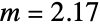 ,
,  and
and  . Find the probability that the component fails within its first year:
𝒟 = QuantityDistribution[HjorthDistribution[2.17, 9.03, 0.17], "Years"];Probability[x ≤ Quantity[1, "Year"], x𝒟]Plot the density function of the time of failure:
Plot[PDF[𝒟, Quantity[t, "Years"]], {t, 0, 8}, Filling -> Axis]Find the time at which the component is most likely to fail:
Quantity[First@FindArgMax[QuantityMagnitude@PDF[𝒟, Quantity[t, "Years"]], t], "Years"]Find the mean time to failure:
Mean[𝒟]Find how long a component can survive with a safety of 90%:
InverseSurvivalFunction[𝒟, 0.9]Find the probability that the component survives for at least one more year after having survived two years:
NProbability[x ≥ Quantity[3, "Years"]x ≥ Quantity[2, "Years"], x𝒟]Simulate the failure times for 30 independent components like this:
ListPlot[{RandomVariate[𝒟, 30], {{0, Mean[𝒟]}, {30, Mean[𝒟]}}}, Joined -> {False, True}, Filling -> Axis, AxesLabel -> Automatic]A piece of electronic equipment has initially high failure rate due to the randomness in the quality variations during its production. Its lifetime can be modeled by HjorthDistribution with parameters  ,
, 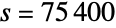 and
and 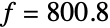 . Plot the hazard function:
𝒟 = QuantityDistribution[HjorthDistribution[6, 75400, 800.8], "Years"];Plot[HazardFunction[𝒟, Quantity[t, "Years"]], {t, 0, 2}, Filling -> Axis]Mean[𝒟]Probability of failure within the first year (warranty period):
Probability[t ≤ Quantity[1, "Year"], t𝒟]To avoid early failures, the equipment is operated at stress level during a "burn-in" period. Find the length of the burn-in period after which the failure probability within the first year is reduced by half:
eqn = (CDF[𝒟, Quantity[1, "Years"] + Quantity[bp, "Years"]] - CDF[𝒟, Quantity[bp, "Years"]]) / (1 - CDF[𝒟, Quantity[bp, "Years"]]) == CDF[𝒟, Quantity[1, "Years"]] / 2;Solve[{eqn, 0 < bp < 1}, bp]//QuietburnIn = Quantity[bp /. First[%], "Years"]UnitConvert[burnIn, "Days"]Find the expected lifetime of the equipment after having survived the burn-in period:
NExpectation[tt ≥ burnIn, t𝒟]Find the time at which the equipment is most reliable:
maxRel = Quantity[ArgMin[{HazardFunction[𝒟, Quantity[t, "Years"]], t > 0}, t], "Years"]Simulate the failure times for 50 independent pieces of equipment like this:
ListPlot[{RandomVariate[𝒟, 50], {{0, Mean[𝒟]}, {50, Mean[𝒟]}}, {{0, maxRel}, {50, maxRel}}}, Joined -> {False, True, True}, Filling -> Axis, AxesLabel -> Automatic, PlotLegends -> {"Simulated", "Mean", "'Infant mortality' zone"}]A rather simple mechanical system is composed of three independent components: two of type A and one of type B. The measured failure times, in days, are:
compA = WeightedData[Automatic, {{2.981404513903204, 0.5168657254928053, 4.817574310667597,
   2.251404494427119, 2.600964244987795, 3.9249944934780108, 4.692482778918926, 2.573280108286907,
   3.986933723430509, 4.06761198577694, 4.521085806658003, 6.70 ...  1, 1, 1, 1, 1, 1, 1, 1, 1, 1, 1, 1, 1, 1, 1, 1, 1, 1, 1, 1, 1, 1, 1, 1, 1,
   1, 1, 1, 1, 1, 1, 1, 1, 1, 1, 1, 1, 1, 1, 1, 1, 1, 1, 1, 1, 1, 1, 1, 1, 1, 1, 1, 1, 1, 1, 1, 1,
   1, 1, 1, 1, 1, 1, 1, 1, 1, 1, 1, 1, 1, 1, 1, 1, 1, 1, 1, 1, 1, 1}}];
compB = WeightedData[Automatic, {{30.325585961084265, 27.513700329498764, 28.010248120775593,
   10.90353777134251, 27.52007434803306, 46.19838803147495, 56.50179419020349, 35.98911572744762,
   47.62033758291881, 49.76020651274327, 82.22210996662847, 35 ...  1, 1, 1, 1, 1, 1, 1, 1, 1, 1, 1, 1, 1, 1, 1, 1, 1, 1, 1, 1, 1, 1, 1, 1, 1,
   1, 1, 1, 1, 1, 1, 1, 1, 1, 1, 1, 1, 1, 1, 1, 1, 1, 1, 1, 1, 1, 1, 1, 1, 1, 1, 1, 1, 1, 1, 1, 1,
   1, 1, 1, 1, 1, 1, 1, 1, 1, 1, 1, 1, 1, 1, 1, 1, 1, 1, 1, 1, 1, 1}}];
Find the estimated distribution for both components, assuming HjorthDistribution:
estimateA = EstimatedDistribution[compA, HjorthDistribution[m, s, f]]estimateB = EstimatedDistribution[compB, HjorthDistribution[m, s, f]]Compare the distribution of the time to failure of each component with the data:
Show[Histogram[{compA, compB}, 20, "PDF"], Plot[{PDF[estimateB, t], PDF[estimateA, t]}, {t, 0, 90}, PlotRange -> All, PlotStyle -> Thick, PlotLegends -> {"B", "A"}]]The system works as long as one component of each type is working. Find the reliability of the system:
dist = ReliabilityDistribution[(Subscript[a, 1]∨Subscript[a, 2])∧b, {{Subscript[a, 1], estimateA}, {Subscript[a, 2], estimateA}, {b, estimateB}}];Plot[SurvivalFunction[dist, t], {t, 0, 10}, Filling -> Axis]Find the mean time to failure:
Mean[dist]Find the probability that the system fails after three days:
Probability[t <= 3, tdist]A simple mechanical system is composed of three independent components: two of type A and one of type B. The system works as long as one component of each type is working. The failure times of each component type follow the distributions:
distA = QuantityDistribution[HjorthDistribution[2.7, 1.34, 0.001], "Days"];
distB = QuantityDistribution[HjorthDistribution[31, 0.02, 0.002], "Days"];
Find the probability that both components A fail before B does:
NProbability[a1 < b∧a2 < b, {a1distA, a2distA, bdistB}]Each time that a component A fails, it is immediately replaced. Find the average number of components of type A used by the system before B fails:
Floor[2Mean[distB] / Mean[distA]]The expected lifetime of the system when adding more components of type A:
distExt[j_] := ReliabilityDistribution[Or@@Table[Subscript[a, i], {i, j}]∧b, Table[{Subscript[a, i], distA}, {i, j}]~Join~{{b, distA}}];means = Table[{j, Mean[distExt[j]]}, {j, 2, 10}];Grid[Prepend[means, {"# of components A", "Expected lifetime"}], Alignment -> Bottom, Frame -> All, Background -> {{None, None}, {LightGray, None}}]ListPlot[means, Filling -> Axis, AxesLabel -> Automatic]Properties & Relations (5)
Hjorth distribution is closed under scaling by a positive factor:
TransformedDistribution[k * u, uHjorthDistribution[m, s, f]]Relationships to other distributions:
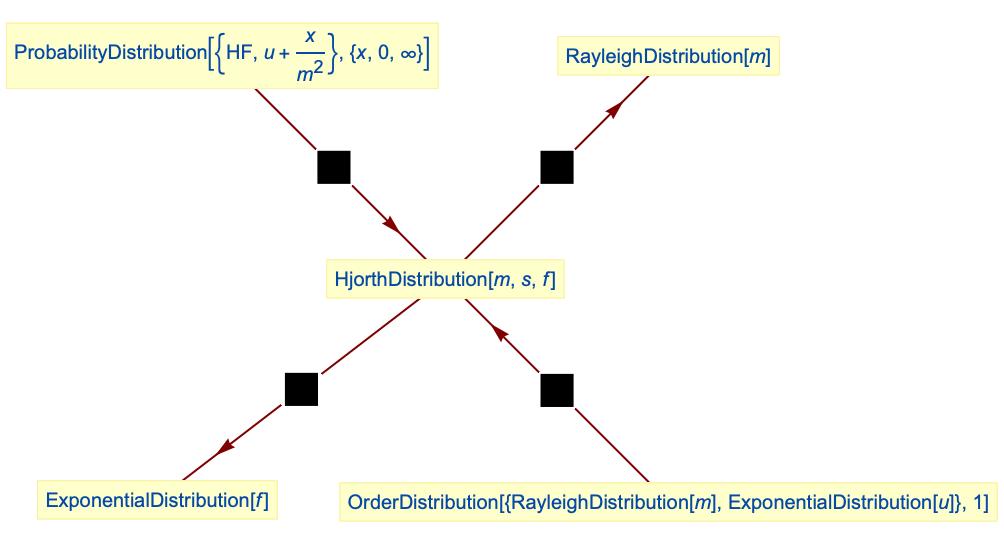
Hjorth distribution simplifies to RayleighDistribution:
PDF[HjorthDistribution[m, s, 0], x]PDF[RayleighDistribution[m], x]Simplify[% - %%]Hjorth distribution can be obtained as ParameterMixtureDistribution of a linear hazard rate distribution with initial failure rate following GammaDistribution:
lhr[u_, m_] := ProbabilityDistribution[{"HF", u + x / m ^ 2}, {x, 0, ∞}]𝒟 = ParameterMixtureDistribution[lhr[u, m], uGammaDistribution[f / s, s]];CDF[𝒟, x]CDF[HjorthDistribution[m, s, f], x]Simplify[% - %%]The linear hazard rate distribution could be obtained as OrderDistribution of ExponentialDistribution and RayleighDistribution:
distOrd = OrderDistribution[{RayleighDistribution[m], ExponentialDistribution[u]}, 1];Simplify[PDF[lhr[u, m], x] - PDF[distOrd, x], Assumptions -> x > 0]ExponentialDistribution is a limiting case of Hjorth distribution:
Limit[Limit[PDF[HjorthDistribution[m, s, f], x], s -> 0], m -> ∞]PDF[ExponentialDistribution[f], x]Simplify[% - %%]Possible Issues (5)
HjorthDistribution is not defined when m or s is not a positive real number:
Mean[HjorthDistribution[3 + I, 1, 2]]
HjorthDistribution is not defined when f is a non-negative real number:
Mean[HjorthDistribution[3, 1, -2]]
Substitution of invalid parameters into symbolic outputs gives results that are not meaningful:
Mean[HjorthDistribution[m, s, f]] /. {m -> 2, s -> 1 - I, f -> -1}//NThe characteristic function of the Hjorth distribution does not have a closed‐form representation:
CharacteristicFunction[HjorthDistribution[m, s, f], t]The function values can be obtained for numeric inputs:
CharacteristicFunction[HjorthDistribution[1.3, 3.2, 4], .5]CharacteristicFunction[HjorthDistribution[13 / 10, 32 / 10, 4], 1 / 2]N[%]The closed form of the moments of Hjorth distribution could lead to some numerical instabilities for some parameters:
mom = Moment[HjorthDistribution[1, 1 / 10, 5], 10]N[%]Find numerical approximation for the moment using inexact parameters:
Moment[HjorthDistribution[1, 0.1, 5], 10]Alternatively, evaluate the closed expression at higher precision:
Block[{$MaxExtraPrecision = 100}, N[mom /. {m -> 1, s -> 1 / 10, f -> 5, r -> 10}, 16]//Re]Neat Examples (1)
PDF for different s values with CDF contours:
dist = HjorthDistribution[1.3, s, 1 / 4];cdf = Function[{x, s}, Evaluate[CDF[dist, x]]];
ql = {0.025, 0.10, 0.25, 0.5, 0.75, 0.90, 0.975};
cl = Table[ColorData["Rainbow"][q], {q, Join[{0.0}, ql]}];Legended[Plot3D[PDF[dist, x], {x, 0, 4}, {s, 0.01, 10}, PlotTheme -> "Marketing", MeshFunctions -> {cdf}, Mesh -> {ql}, MeshStyle -> GrayLevel[0.8], MeshShading -> cl, AxesLabel -> Automatic, BaseStyle -> Opacity[0.9], ImageSize -> 400, PlotRange -> All, PlotPoints -> 50], BarLegend["Rainbow", ql, LegendLabel -> "prob"]]Text
Wolfram Research (2017), HjorthDistribution, Wolfram Language function, https://reference.wolfram.com/language/ref/HjorthDistribution.html.
CMS
Wolfram Language. 2017. "HjorthDistribution." Wolfram Language & System Documentation Center. Wolfram Research. https://reference.wolfram.com/language/ref/HjorthDistribution.html.
APA
Wolfram Language. (2017). HjorthDistribution. Wolfram Language & System Documentation Center. Retrieved from https://reference.wolfram.com/language/ref/HjorthDistribution.html